Friday, November 16, 2018

Muslim Sainthood Upon Pattern of Minor Prophethood

نحمده ونصلى ونسلم على رسوله الكريم
I recently wrote a piece in Urdu on the comparison between Wilaya (sainthood) in the Muslim Umma and the minor prophethood that existed in ancient Israel. Some mystics attribute the following Hadith to the Prophet Muhammad صلى الله عليه وسلم:
عُلَمَاءُ أُمَّتِي كَأَنْبِيَاءِ بَنِي إِسْرَائِيلَ
“The Ulama of my nation are like the Prophets of the children of Israel.”

However, this narration has no basis according to the Muhaddithin as it lacks any sanad that can be traced back to the Prophet صلى الله عليه وسلم. Nevertheless, its meaning is certainly correct. In a previous post, I quoted the Deobandi elder Rashid Gangohi who attributed this saying to the Prophet صلى الله عليه وسلم despite the fact it lacks a chain of narrators through which it can be accurately traced back to the mouth of the Prophet صلى الله عليه وسلم. Likewise, Ghulam Ahmad Qadiani, founder of the Ahmadiyya movement, declared this Hadith true and as having emanated from the mouth of the Prophet صلى الله عليه وسلم (Ruhani Khaza’in v.17 p.122).
Another narration on the authority of sayyidina Ibn Abbas رضى الله عنهما that the Prophet صلى الله عليه وسلم said:
إِنَّ أَقْرَبَ النَّاسِ دَرَجَةً مِنْ دَرَجَةِ النُّبُوَّةِ أَهْلُ الْجِهَادِ وَأَهْلُ الْعِلْمِ
“Verily, the closest of mankind to the level of prophethood are the people of Jihad and the people of knowledge.”
(Siyar A’lam an-Nubalaa)
This Hadith is weak due to the narrator Hafs b. Juma’i, nevertheless, its meaning is certainly correct. By the term “minor prophethood” that was present in Israel, I am referring to the numerous prophets whom Allah raised up in that nation who warned their people and rulers against idolatry. After the time of king Solomon عليه السلام the Israelites and Jews frequently relapsed into the worship of foreign “gods”. In the Hebrew Bible, there are the scriptures of twelve minor prophets: Hosea, Joel, Amos, Obadiah, Jonah, Micah, Nahum, Habakkuk, Zephaniah, Haggai, Zechariah and Malachi. Only one of these, (Prophet Jonas) is explicitly mentioned in the holy Qur’an. Other prophets, namely, Isaiah, Jeremiah and Ezekiel, are considered “major prophets”, but they should in fact be included in the list of those minor prophets who were raised up in Israel during the interval between king Solomon and the Messiah of Nazareth عليهما السلام.  Although the Hebrew Bible considers Daniel a “seer” and technically not a prophet, hence why the scripture attributed to him appears in the Ketuvim and not in the Nevi’im, it is quite possible that he too was among the minor prophets. Prophet Muhammad صلى الله عليه وسلم said:
لَقَدْ كَانَ فِيمَنْ كَانَ قَبْلَكُمْ مِنْ بَنِي إِسْرَائِيلَ رِجَالٌ يُكَلَّمُونَ مِنْ غَيْرِ أَنْ يَكُونُوا أَنْبِيَاءَ، فَإِنْ يَكُنْ مِنْ أُمَّتِي مِنْهُمْ أَحَدٌ فَعُمَرُ
“There used to be from among those before you among the children of Israel men to whom (Allah) spoke despite them not having been prophets. So if there is anyone from my Umma among them it is Umar.”
(Sahih al-Bukhari)

The line between what are known as “minor prophets” in the Hebrew Bible and what the Prophet Muhammad صلى الله عليه وسلم termed as Muhaddathin, men to whom Allah spoke despite technically not having been prophets, appears to be blurred. According to various Ahadith, almost all of which are either weak or extremely weak, there were thousands of prophets in the past, and it appears that at least half or the majority of them were raised up among Israel. Muslims commonly state that there were 124 thousand prophets, but Allah knows best. It appears to me that the number of prophets probably runs into the thousands, and certainly into the hundreds. It is also true that a disproportionately large number of prophets were sent to the children of Israel as compared to other nations. Prophet Muhammad صلى الله عليه وسلم  verified this fact:
كَانَتْ بَنُو إِسْرَائِيلَ تَسُوسُهُمُ الأَنْبِيَاءُ، كُلَّمَا هَلَكَ نَبِيٌّ خَلَفَهُ نَبِيٌّ، وَإِنَّهُ لاَ نَبِيَّ بَعْدِي، وَسَيَكُونُ خُلَفَاءُ فَيَكْثُرُونَ
“The children of Israel were governed by the prophets. Whenever a prophet died he was succeeded by a prophet. But there is no prophet after me, yet there will come many caliphs (successors after me).”
(Bukhari & Muslim)

So it may be accepted that in ancient Israel there was a very large number of minor prophets and muhaddithin that appeared among them, having been raised up by Allah Who disclosed matters of the unseen to them, primarily concerning future punishments that would befall the nation for its continuous lapsing into idolatry and its failure to observe the strictures of the Law of Moses. Although prophethood in the formal sense and structure has ceased after the Prophet Muhammad - Seal of the Prophets -  its substance and meaning remains and is manifested in the chain of Muslim saints. The system of Wilaya or sainthood in the Muslim Umma is a reflection of and patterned upon the system of minor prophecy that existed in ancient Israel. This is because the function and attributes of our Muslim saints mirrors that of the Israelite minor prophets. Our Muslim saints attain ma’rifa or recognition of many hidden and mystical matters, through a form of divine inspiration known as kashf. Some matters of the unseen may be disclosed to them, though not as regularly or strongly as in the case of a real prophet. Furthermore, our Muslim saints are tasked by Allah to rejuvenate the faith of the Believers by inspiring them with their extreme piety and speaking out against the idolatry and corruption that has materialized in this Umma. When Prophet Muhammad صلى الله عليه وسلم said that there would be no prophet after him but that he would be succeeded by a large number of caliphs, those caliphs include the pious Muslim saints and mystics who have appeared in this Umma in the hundreds of thousands. And this is the meaning of the Ayatayn:
اهْدِنَا الصِّرَاطَ الْمُسْتَقِيمَ ﴿٦﴾ صِرَاطَ الَّذِينَ أَنْعَمْتَ عَلَيْهِمْ
Guide us to the Straight Path. The Path of those upon whom is Your favor.
(Sura 1:6-7)

As well as the meaning of the Salat al-Ibrahimiya:
اللَّهُمَّ صَلِّ عَلَى مُحَمَّدٍ عَبْدِكَ وَرَسُولِكَ، كَمَا صَلَّيْتَ عَلَى إِبْرَاهِيمَ، وَبَارِكْ عَلَى مُحَمَّدٍ وَعَلَى آلِ مُحَمَّدٍ، كَمَا بَارَكْتَ عَلَى إِبْرَاهِيمَ وَآلِ إِبْرَاهِيمَ
“Allahumma! Prayers upon Muhammad, Your servant and Your apostle, as You prayed upon Abraham. And blessings upon Muhammad and upon the family of Muhammad, as you blessed Abraham and the family of Abraham.”

Bid'ah of Celebrating the Mawlid

These are the days of Rabi al-Awwal, and it is specifically on the 12th of this month during which people commemorate the Prophet’s (sall Allahu alayhi wasallam) birthday, known as the Mawlid. Other Muslims, such as myself, consider this celebration to be an un-Islamic innovation. Several years ago I was invited by my local mosque to deliver the Friday sermon. I was given a list of recommended topics to select from and then subsequently prepare a khutba on. I selected the topic of the innovation of the Mawlid and delivered a fiery sermon against this celebration, denouncing it in very strong words, while urging the congregation to adhere instead to the Prophet’s Sunna. Immediately after the worship was concluded there was an uproar in the mosque. From that day I realized how steeped so many of our people are in innovated celebrations like the Mawlid, which they are unwilling to relinquish despite knowing full well there is no basis for such things in Islam. The fact of the matter is that those who do commemorate the Mawlid do so under the pretext that it is a religious event. Undoubtedly, there must be millions of uneducated Muslims out there who truly believe that this tradition is part and parcel of Islam and are simply unaware of its real status. Tracing the history of this particular celebration, it becomes known that it was invented by the so-called Fatimid dynasty that ruled much of the Muslim world from Egypt. The so-called Fatimid dynasty was associated with the misguided Ismaili subsect of Imamiya Shiism, but ironically it is the Sunni world in which the Mawlid is celebrated with the greatest of fervor, with the notable exception of Saudi Arabia. The Barelwis and other denominations influenced by folk expressions of Islam celebrate the Mawlid, while Salafis and Deobandis regard it as an innovation. As has already preceded, my own position mirrors that of the Salafis and Deobandis, i.e., if the Mawlid is an Islamic celebration was was it not legislated by Allah in the Quran or through the Prophet in his Sunna? Why was it never observed by the Sahaba or the Salaf? Some may argue that the Mawlid is merely a popular expression of the Muslims’ love of the Prophet (sall Allahu alayhi wasallam) and their joy on the occassion of his birth. Again, the implication is that the Prophet’s most devoted followers, the Sahaba, lacked this sentiment as they never observed any kind of celebration in the name of the Mawlid. This celebration appeared centuries after the Prophet (sall Allahu alayhi wasallam) had died, it was invented by the esotericist Ismaili Shiite dynasty. Prophet Muhammad (sall Allahu alayhi wasallam) said:
مَنْ أَحْدَثَ فِي أَمْرِنَا هَذَا مَا لَيْسَ فِيهِ فَهُوَ رَدٌّ
“Whoever innovates into this, our affair, that which is not from it, then it is rejected.”
“This our affair” means the Din, the Religion of Islam. Consequently, the Prophet (sall Allahu alayhi wasallam) did not condemn innovation or progress that is made in worldly affairs that are separate from matters of Religion. It is only innovation in Religion that has been severely condemned because Allah Most High has declared that Islam is complete and perfect:
الْيَوْمَ أَكْمَلْتُ لَكُمْ دِينَكُمْ وَأَتْمَمْتُ عَلَيْكُمْ نِعْمَتِي وَرَضِيتُ لَكُمُ الْإِسْلَامَ دِينًا
Today have I have perfected for you your Religion, and completed My favor upon you and am pleased with Islam for you as Religion.
(Sura 5:3)
In light of this, the Prophet (sall Allahu alayhi wasallam) said:
وَشَرَّ الأُمُورِ مُحْدَثَاتُهَا وَكُلَّ مُحْدَثَةٍ بِدْعَةٌ وَكُلَّ بِدْعَةٍ ضَلاَلَةٌ وَكُلَّ ضَلاَلَةٍ فِي النَّارِ
“The worst of the affairs are the newly-invented. Every newly-invented is an innovation, and every innovation is misguidance, and every misguidance is in the Hellfire.”
Indeed, the Mawlid is a textbook case of the kind of religious innovation that has been reproved by Islam. Religious innovation that is contrary to the Prophet’s Sunna is the root of the sectarianism and deviation from the truth in the Muslim world. But although the Mawlid is an innovation, and the practice of innovations is even more dangerous than the committing of ordinary sins, it is not the kind of innovation that expels the doer from the circle of Islam. Therefore, be balanced in your rebuking of the Mawlid and those who practice it out of ignorance, making sure not to excommunicate them from Islam merely on account of this matter. The innovation of the Mawlid is to single out the 12th of Rabi al-Awwal to celebrate the Prophet’s birthday. True love for the Prophet (sall Allahu alayhi wasallam) must be expressed in a manner that coincides with the behavior of the Sahaba (radi Allahu anhum). They would sing poems in praise of the Prophet (sall Allahu alayhi wasallam) but never singled out the 12th of Rabi ul-Awwal for that. Nor did they take out processions on the street, waving banners and holding up placards and the like as is commonly done by the innovators in our time. The Prophet (sall Allahu alayhi wasallam) cautioned us that we as a nation would emulate the Jews and Christians to such an extent that if one of them had entered the hole of a lizard, someone from this nation would follow him in that foolish action. Worldwide, Christians celebrate Christmas, the 25th of December, to commemorate the birth of Christ. This despite the fact that the 25th of December is not his date of birth, but was transformed into a Christian celebration when previously it was a pagan Roman festival to mark the winter solstice. Neither the promised Messiah nor his disciples and original followers ever celebrated Christmas. Even today there are some Christian churches which reject Christmas, notably, the Jehovah’s Witnesses. The so-called “traditionalist” Sunni Muslims who celebrate the Mawlid are no different in this regard from the “traditionalist” Roman Catholic Church which is the most ardent in celebrating and promoting the pagan festival known as Christmas. One of the most prominent Barelwi gurus, Tahir ul-Padri, is arguably the first major religious figure in the Muslim world who openly and shamelessly participates in Christmas celebrations with the Christian community. I should make clear here that while there is a growing tendency of irreligious, liberal and secular Muslims who not only greet and congradulate Christians on the occassion of Christmas, but actually participate in the festivities themselves, such a travesty must be avoided with as much care as possible by true God-fearing Muslims. We cannot compromise on the Oneness of Allah or the purity of our beliefs and religious practice in the slightest.

Tuesday, November 13, 2018

Beast of the Earth (Part 2)

بسم الله الرحمن الرحيم
نحمده ونصلى على رسوله الكريم
Among the major signs of Judgment Day, mentioned explicitly in the Qur’an, is the emegence of the “Beast”:
وَإِذَا وَقَعَ الْقَوْلُ عَلَيْهِمْ أَخْرَجْنَا لَهُمْ دَابَّةً مِّنَ الْأَرْضِ تُكَلِّمُهُمْ أَنَّ النَّاسَ كَانُوا بِآيَاتِنَا لَا يُوقِنُونَ۞
And when the word is fulfilled against them, We shall take out for them a Beast from the Earth speaking to them because mankind was, of our Signs, not certain.
(Sura 27:82)
In a previous entry, I stated: “This ‘Beast’ is therefore not some four-legged animal, or some kind of mythical or monstrous creature. He is an evil human being, or in Qur’anic terminology, a beast that has the ability to speak”. Furthermore, I have identified the Beast with the eschatological figure that is mentioned in the Bible. Unlike the figure of the Dajjal (Antichrist), the Beast and his emergence has been mentioned explicitly in the text of the holy Qur’an. Perhaps this means that the Beast’s appearance is more significant than that of the Dajjal. Both are, however, among the ten major signs of the Hour. Imam al-Qurtubi has mentioned the fact that some of the latter exegetes said that the Beast is a speaking human (Kitab al-Tadkira bi-Ahwal al-Mawta wa-Amur al-Akhira p.1334):


Prophecy of Transportation

بسم الله الرحمن الرحيم
نحمده ونصلى على رسوله الكريم

The prophecies of Prophet Muhammad صلوات الله وسلامه عليه not only concern events but significant changes and developments in human civilization and technological progress. For centuries after the death of the Prophet صلوات الله وسلامه عليه the mode of transportation (riding beasts) remained the same without any change. Then with the onset of the industrial revolution less than two centuries ago, human civilization was transformed significantly with the development of modern modes of transportation, i.e., automobiles, trains, aircraft, etc. An indication of this evolution in the modes of transportation is in the Quran:
وَالْخَيْلَ وَالْبِغَالَ وَالْحَمِيرَ لِتَرْكَبُوهَا وَزِينَةً ۚ وَيَخْلُقُ مَا لَا تَعْلَمُونَ۞
And (He created) horses, mules, and donkeys for you to ride them and (as) adornment. And He creates what you know not.
(Sura 16:8)
The word yakhluqu “He creates” is an imperfect verb, in the tense known as madare used for both present and future. This is highly significant, as it literally means Allah continues to create and will create in the future other things which we are not at present acquainted with nor have knowledge of, for the purpose of riding and adornment. More specific prophecies regarding modern modes of transportation can be found in the authentic Hadith of the Prophet صلوات الله وسلامه عليه:
سَيَكُونُ فِي آخِرِ أُمَّتِي رِجَالٌ يَرْكَبُونَ عَلَى السُّرُوجِ ، كَأَشْبَاهِ الرّحالِ يَنْزِلُونَ عَلَى أَبْوَابِ الْمَسْجِدِ
“There will be, in last of my Umma, men who ride saddles that resemble dwellings. They will alight at the doors of the mosque.”
(Musnad Ahmad and Sahih Ibn Hibban)
سَيَكُونُ فِي آخِرِ هَذِهِ الأُمَّةِ رِجَالٌ يَرْكَبُونَ عَلَى الْمَيَاثِرِ ، حَتَّى يَأْتُوا أَبْوَابَ مَسَاجِدِهِمْ
“There will be in the last of this Umma men who ride on mayathir till they come to the doors of their mosques.”
(Mustadrak al-Hakim)
Mayathir, plural of mithara, mean coverings made of silk or brocade that are placed over seats or saddles. Clearly, these means of transport which resemble saddles or wagons that are driven without being pulled by beasts of burden is a reference to the automobile. Remarkably, the Prophetصلوات الله وسلامه عليه also predicted the end of the use of riding beasts like the horse and camel:
وَتَكُونَ الْفَرَسُ بِالدُّرَيْهِمَاتِ ‏‏.‏ قَالُوا يَا رَسُولَ اللَّهِ وَمَا يُرْخِصُ الْفَرَسَ قَالَ‏ لاَ تُرْكَبُ لِحَرْبٍ أَبَدًا
“Horses will be sold for mere dirhams.” They said, “O Allah’s Apostle, why will horses be so cheap?” He said: “They will never be riden for war again.”
(Sunan Ibn Maja #4077)
وَلَتُتْرَكَنَّ الْقِلاَصُ فَلاَ يُسْعَى عَلَيْهَا
“He will abandon the young she-camel so no one will show any interest in her.”
(Sahih Muslim: Kitab al-Iman)
These two Hadith are regarding the time of the end, when the Antichrist and true Messiah appear respectively. In the Quran too is a prophecy that the highly sought after she camel will one day be abandoned:
وَإِذَا الْعِشَارُ عُطِّلَتْ
And when the full-term she-camels are abandoned
(Sura 81:4)
The abandoning of something as valuable as the full-term she-camel was unimaginable in the time of the Prophet صلوات الله وسلامه عليه. Only now, as modern modes of transportation have all but replaced the riding beast can these Islamic prophecies be appreciated and understood, and Allah knows best.

Sunday, November 11, 2018

No Flaws in Heaven (Sura 50:6)


We Muslims believe the Holy Qur’an is the literal speech of Allah Most High - Creator of Heaven and Earth. Although the Qur’an is not a book of science, we believe it is the absolute truth and is inerrant. Nevertheless, certain statements in the Qur’an are contested as being false from a modern scientific perspective. Essentially, our response to such claims is that either they have misconstrued the actual meaning of the Qur’anic content, for the actual meaning is different and therefore does not go against modern science, or the Qur’an does indeed say something that is at variance with modern scientific observations, but it is those observations which are flawed and not the Qur’an. In this entry, I shall give an example of this. Allah says:
أَفَلَمْ يَنظُرُوا إِلَى السَّمَاءِ فَوْقَهُمْ كَيْفَ بَنَيْنَاهَا وَزَيَّنَّاهَا وَمَا لَهَا مِن فُرُوجٍ
Do they not look at the heaven above them, how We structured it and adorned it, and (how) it has no flaws?
(Sura 50:6)
The word I would like to draw your attention to here is furuj (plural of farj) which is usually translated to mean rift, crack, gap, etc. However, the word also means flaw (Arabic-English Dictionary of Qur’anic Usage, p.698). Admittedly, most translations and explanations of the verse understand furuj to mean rifts or gaps. An objection that may be made against the inerrancy of the Qur’an, therefore, is that it claims the heaven above us (outer space, the cosmos), has no rifts or rips in its fabric. Yet the existence of black holes, or the theorized existence of cosmic strings would render this Qur’anic statement patently false. Now by understanding the word furuj to mean flaw in general, without specifying the meaning of rift or gap, something that is linguistically sound, this particular objection would dissipate. However, it may also be argued that our scientific observations and modern understanding of black holes is itself hotly contested, and that using words like rift or gap in space time to describe their reality is not entirely accurate. Cosmologists and physicists themselves avoid such language and terms because they are imprecise and simplistic in describing phenomena like black holes. As for the Holy Qur’an, its purpose is to direct our attention to the intelligent and flawless design of the heaven above us.

Saturday, November 10, 2018

Avoid the Government and Rulers


بسم الله الرحمن الرحيم

والصلاة والسلام على افضل الابنياء والمرسلين

وعلى اهل بيته الطيبين الطاهرين المظلومين

Part and parcel of Islam’s unique political narrative is the idea that, generally speaking, the worldly rulers are a corrupting influence and ought to be avoided as much as possible. A sign of the genuine Ulama of Islam is their remoteness from the palaces of the rulers. According to sayyidina Ibn Abbas رضى الله عنهما Prophet Muhammad صلى الله عليه وآله وسلم said:

مَنْ أَتَى السُّلْطَانَ افْتُتِنَ

One who goes to the sultan will be tried”

(Sunan Abi Dawud #2859)

In in another version:

وَمَنِ اتَّبَعَ السُّلْطَانَ افْتُتِنَ

One who follows the sultan will be tried.”

(Sunan an-Nasa’i #4314)


According to a similar report from an elder of the Ansar, narrating from sayyidina Abi Huraira رضى الله عنهما the Prophet صلى الله عليه وآله وسلم said:

وَمَنْ لَزِمَ السُّلْطَانَ افْتُتِنَ وَمَا ازْدَادَ عَبْدٌ مِنَ السُّلْطَانِ دُنُوًّا إِلاَّ ازْدَادَ مِنَ اللَّهِ بُعْدًا

One who clings to the sultan will be tried. A worshipper does not increase in nearness to the sultan except that he increases in distance to Allah.”

(Sunan Abi Dawud #2860)


The word sultan denotes a ruler with authority. This Hadith does not apply to the rightly-guided Caliphs of Islam, or other very pious emirs and leaders in whose company a Muslim is uplifted and comes nearer to Allah. However, such pious rulers have always been extremely rare in our history. Beginning with the Umayyads and lasting till this day, the Muslims have been ruled by a succession of impious, self-serving sultans who sought to manipulate the Religion through bribing and corrupting the Ulama. This is why the Prophet صلى الله عليه وآله وسلم warned us to stay away from the sultans, otherwise we would be put to trial. Nowadays, the office of “Grand Mufti”, despite such a pretentious title, is a figure that should be treated with extreme skepticism by the Muslims. We ought to disregard the supposed Ulama who are seen frequenting the rulers, happily sitting next to them, dining with them, etc. The sign of a genuine mystic or learned scholar is that he does not go willingly to the court of the ruler. But when does happen to be in the presence of the ruler, a Believer should rebuke him for his injustice, oppression and other shortcomings with regard to observing and implementing the Shari’a:


عَنْ طَارِقِ بْنِ شِهَابٍ أَنَّ رَجُلًا سَأَلَ رَسُولَ اللَّهِ صَلَّى اللَّهُ عَلَيْهِ وَسَلَّمَ أَيُّ الْجِهَادِ أَفْضَلُ قَالَ كَلِمَةُ حَقٍّ عِنْدَ سُلْطَانٍ جَائِرٍ

Tariq ibn Shihab reported: A man asked the Messenger of Allah, peace and blessings be upon him, “What is the best Jihad?” The Prophet said, “A word of truth in front of a tyrannical sultan.”

(Musnad Ahmad)


The very nature of the modern state means it is authoritarian, coercive, and repressive of Islam.

Friday, November 9, 2018

Four Rivers of Paradise (Part 2)


بسم الله الرحمن الرحيم

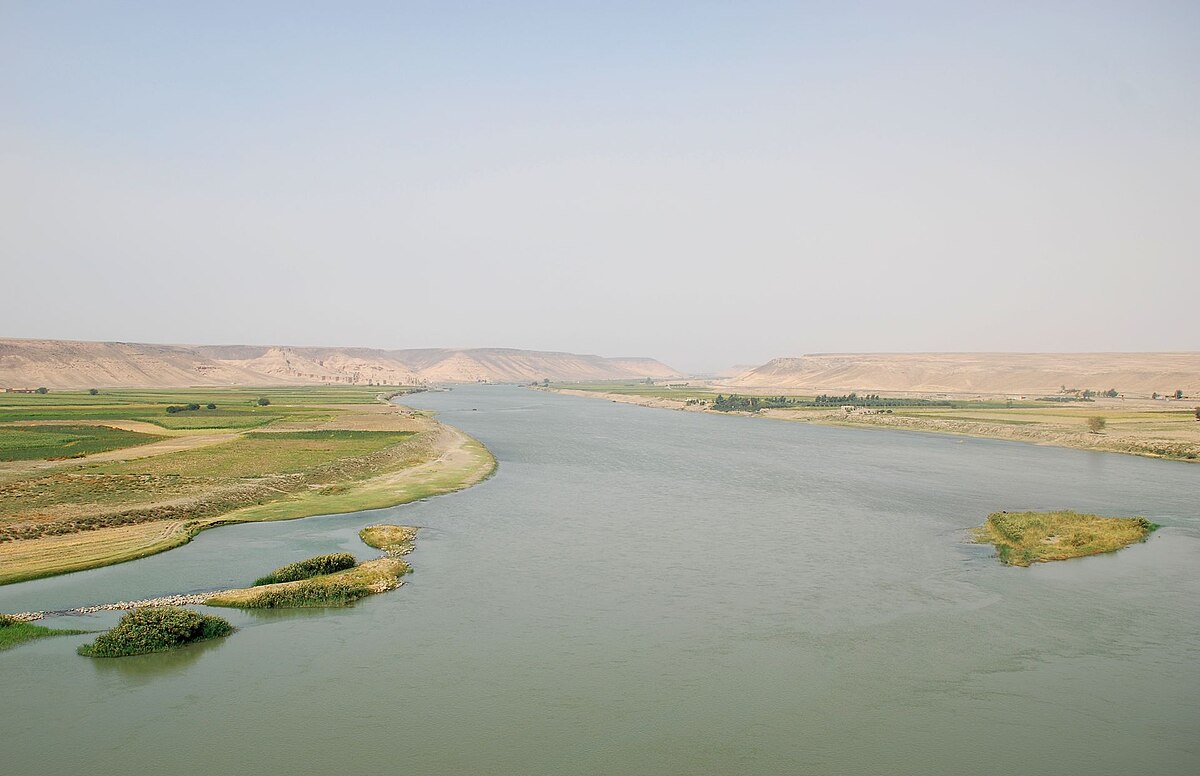
Continuing from the previous entry, we discussed the Four Rivers of Paradise (Sayhan, Jayhan, the Euphrates and the Nile) as a proof that Paradise is on this Earth, when the latter shall be transformed into a “new Earth”. Although the Euphrates and the Nile are two well known rivers, there is some dispute about the exact identity of the Sayhan and Jayhan rivers. I argued that the Jayhan river must correspond to the Gihon river mentioned in the Bible (Genesis 2:13), and perhaps this is the Amu Darya (Oxus River), which is known as Jayhun to the Arabs, but Allah knows best. Imam an-Nawawi has disputed this claim in his Sharh of the Hadith:
اعلم أن سيحان وجيحان غير سيحون وجيحون
“Know that the Sayhan and Jayhan are other than the Sayhun and Jayhun”
According to Imam an-Nawawi, these two rivers are located in the land of the Armenians. He identifies the Jayhan with the Ceyhan River in Anatolia. Qadi Iyad, however, located the Sayhan and Jayhan rivers in Transoxania, i.e., the Jaxartes (Syr Darya) and the Oxus (Amu Darya).
Perhaps a clue to the reality of the Sayhan and Jayhan rivers can be found in another Hadith which describes the Prophet’s Mi’raj (spiritual ascension) to Heaven:

وَرُفِعَتْ لِي سِدْرَةُ الْمُنْتَهَى فَإِذَا نَبِقُهَا كَأَنَّهُ قِلاَلُ هَجَرٍ، وَوَرَقُهَا كَأَنَّهُ آذَانُ الْفُيُولِ، فِي أَصْلِهَا أَرْبَعَةُ أَنْهَارٍ نَهْرَانِ بَاطِنَانِ وَنَهْرَانِ ظَاهِرَانِ، فَسَأَلْتُ جِبْرِيلَ فَقَالَ أَمَّا الْبَاطِنَانِ فَفِي الْجَنَّةِ، وَأَمَّا الظَّاهِرَانِ النِّيلُ وَالْفُرَاتُ

Then I was shown Sidrat ul-Muntaha and its Nabiq fruits which resembled the clay jugs of Hajr, and its leaves were like the ears of elephants, and four rivers originated at its root, two of them were hidden and two were apparent. I asked Gabriel and he said: “The two hidden rivers are in Paradise, and the two apparent ones are the Nile and the Euphrates.”

(Sahih al-Bukhari #3207)

Therefore, the stronger view is that these two rivers (Sayhan and Jayhan) are the two hidden rivers of Paradise which the Prophet (sall Allahu alayhi wa-alihi wasallam) was shown during the Mi’raj and Allah knows best!

Four Rivers of Paradise


بسم الله الرحمن الرحيم

Prophet Muhammad (sall Allahu alayhi wa-alihi wasallam) said:

سَيْحَانُ وَجَيْحَانُ وَالْفُرَاتُ وَالنِّيلُ كُلٌّ مِنْ أَنْهَارِ الْجَنَّةِ

“Sayhan, Jayhan, the Euphrates and the Nile are each from the Rivers of Paradise.”

(Sahih Muslim #7161)

Something similar is affirmed in the Torah:

י  וְנָהָר יֹצֵא מֵעֵדֶן, לְהַשְׁקוֹת אֶת-הַגָּן; וּמִשָּׁם, יִפָּרֵד, וְהָיָה, לְאַרְבָּעָה רָאשִׁים

And a river went out of Eden to water the garden; and from thence it was parted, and became four heads.

יא  שֵׁם הָאֶחָד, פִּישׁוֹן--הוּא הַסֹּבֵב, אֵת כָּל-אֶרֶץ הַחֲוִילָה, אֲשֶׁר-שָׁם, הַזָּהָב

The name of the first is Pishon; that is it which compasseth the whole land of Havilah, where there is gold;

יב  וּזְהַב הָאָרֶץ הַהִוא, טוֹב; שָׁם הַבְּדֹלַח, וְאֶבֶן הַשֹּׁהַם

and the gold of that land is good; there is bdellium and the onyx stone.

יג  וְשֵׁם-הַנָּהָר הַשֵּׁנִי, גִּיחוֹן--הוּא הַסּוֹבֵב, אֵת כָּל-אֶרֶץ כּוּשׁ

And the name of the second river is Gihon; the same is it that compasseth the whole land of Cush.

יד  וְשֵׁם הַנָּהָר הַשְּׁלִישִׁי חִדֶּקֶל, הוּא הַהֹלֵךְ קִדְמַת אַשּׁוּר; וְהַנָּהָר הָרְבִיעִי, הוּא פְרָת

And the name of the third river is Tigris; that is it which goeth toward the east of Asshur. And the fourth river is the Euphrates.

(Genesis 2:10-14)

The Hadith of Sahih Muslim has explicitly identified two known rivers, i.e., the Euphrates and the Nile. The Biblical passage clearly identifies the Euphrates too, called the Perath. Another river mentioned in the Bible is the Chiddeqel or Hiddekel “east of Assyria”. It is generally believed that this is the Tigris River, but it cannot be said for certain. Perhaps this corresponds to the Sayhan river mentioned in the Hadith. I believe that the Gihon river mentioned in the Bible corresponds to the Jayhan river. Although the Bible says that this river encompasses the land of Cush, it is not necessarily referring to the famous Cush in Africa, but perhaps the Hindu Kush region of Central Asia. Therefore, the Jayhan or Gihon is none other than the Oxus river, also known as the Amu Darya. This leaves the Pishon, which has to be the Nile River as mentioned in the Hadith of Sahih Muslim. The French exegete Rashi likewise identified the Pishon with the Nile: “Rashi, the foremost biblical commentator, identifies the Pishon as the Nile River. The word Pishon, he explains, has the connotation of gushing forth and overflowing, and symbolizes the Nile River, which would overflow and irrigate the land of Egypt. Alternatively, the word Pishon is associated with the Hebrew word pishtan, flax, a reference to the ancient Egyptian flax industry, which was watered by the Nile River. According to this view, the area called Havilah refers to somewhere along the Nile region, perhaps Egypt or Sudan. Egyptians were known to have mined gold and precious stones back in pre-dynastic times, especially in the region known in ancient times as Nubia, modern-day southern Egypt and Sudan.”
Both the Hadith and the Biblical passage reinforce the view that Paradise is on this Earth.

Talhah bin al-Baraa: A Young Boy Who Kissed the Prophet's Feet

  بِسۡمِ اللّٰہِ الرَّحۡمٰنِ الرَّحِیۡمِ  In the Name of Allah, the Rahman, the Merciful الصلاة والسلام عليك يا سيدي يا رسول الله The Compan...