Tuesday, November 13, 2018

Prophecy of Transportation

بسم الله الرحمن الرحيم
نحمده ونصلى على رسوله الكريم

The prophecies of Prophet Muhammad صلوات الله وسلامه عليه not only concern events but significant changes and developments in human civilization and technological progress. For centuries after the death of the Prophet صلوات الله وسلامه عليه the mode of transportation (riding beasts) remained the same without any change. Then with the onset of the industrial revolution less than two centuries ago, human civilization was transformed significantly with the development of modern modes of transportation, i.e., automobiles, trains, aircraft, etc. An indication of this evolution in the modes of transportation is in the Quran:
وَالْخَيْلَ وَالْبِغَالَ وَالْحَمِيرَ لِتَرْكَبُوهَا وَزِينَةً ۚ وَيَخْلُقُ مَا لَا تَعْلَمُونَ۞
And (He created) horses, mules, and donkeys for you to ride them and (as) adornment. And He creates what you know not.
(Sura 16:8)
The word yakhluqu “He creates” is an imperfect verb, in the tense known as madare used for both present and future. This is highly significant, as it literally means Allah continues to create and will create in the future other things which we are not at present acquainted with nor have knowledge of, for the purpose of riding and adornment. More specific prophecies regarding modern modes of transportation can be found in the authentic Hadith of the Prophet صلوات الله وسلامه عليه:
سَيَكُونُ فِي آخِرِ أُمَّتِي رِجَالٌ يَرْكَبُونَ عَلَى السُّرُوجِ ، كَأَشْبَاهِ الرّحالِ يَنْزِلُونَ عَلَى أَبْوَابِ الْمَسْجِدِ
“There will be, in last of my Umma, men who ride saddles that resemble dwellings. They will alight at the doors of the mosque.”
(Musnad Ahmad and Sahih Ibn Hibban)
سَيَكُونُ فِي آخِرِ هَذِهِ الأُمَّةِ رِجَالٌ يَرْكَبُونَ عَلَى الْمَيَاثِرِ ، حَتَّى يَأْتُوا أَبْوَابَ مَسَاجِدِهِمْ
“There will be in the last of this Umma men who ride on mayathir till they come to the doors of their mosques.”
(Mustadrak al-Hakim)
Mayathir, plural of mithara, mean coverings made of silk or brocade that are placed over seats or saddles. Clearly, these means of transport which resemble saddles or wagons that are driven without being pulled by beasts of burden is a reference to the automobile. Remarkably, the Prophetصلوات الله وسلامه عليه also predicted the end of the use of riding beasts like the horse and camel:
وَتَكُونَ الْفَرَسُ بِالدُّرَيْهِمَاتِ ‏‏.‏ قَالُوا يَا رَسُولَ اللَّهِ وَمَا يُرْخِصُ الْفَرَسَ قَالَ‏ لاَ تُرْكَبُ لِحَرْبٍ أَبَدًا
“Horses will be sold for mere dirhams.” They said, “O Allah’s Apostle, why will horses be so cheap?” He said: “They will never be riden for war again.”
(Sunan Ibn Maja #4077)
وَلَتُتْرَكَنَّ الْقِلاَصُ فَلاَ يُسْعَى عَلَيْهَا
“He will abandon the young she-camel so no one will show any interest in her.”
(Sahih Muslim: Kitab al-Iman)
These two Hadith are regarding the time of the end, when the Antichrist and true Messiah appear respectively. In the Quran too is a prophecy that the highly sought after she camel will one day be abandoned:
وَإِذَا الْعِشَارُ عُطِّلَتْ
And when the full-term she-camels are abandoned
(Sura 81:4)
The abandoning of something as valuable as the full-term she-camel was unimaginable in the time of the Prophet صلوات الله وسلامه عليه. Only now, as modern modes of transportation have all but replaced the riding beast can these Islamic prophecies be appreciated and understood, and Allah knows best.

Sunday, November 11, 2018

No Flaws in Heaven (Sura 50:6)


We Muslims believe the Holy Qur’an is the literal speech of Allah Most High - Creator of Heaven and Earth. Although the Qur’an is not a book of science, we believe it is the absolute truth and is inerrant. Nevertheless, certain statements in the Qur’an are contested as being false from a modern scientific perspective. Essentially, our response to such claims is that either they have misconstrued the actual meaning of the Qur’anic content, for the actual meaning is different and therefore does not go against modern science, or the Qur’an does indeed say something that is at variance with modern scientific observations, but it is those observations which are flawed and not the Qur’an. In this entry, I shall give an example of this. Allah says:
أَفَلَمْ يَنظُرُوا إِلَى السَّمَاءِ فَوْقَهُمْ كَيْفَ بَنَيْنَاهَا وَزَيَّنَّاهَا وَمَا لَهَا مِن فُرُوجٍ
Do they not look at the heaven above them, how We structured it and adorned it, and (how) it has no flaws?
(Sura 50:6)
The word I would like to draw your attention to here is furuj (plural of farj) which is usually translated to mean rift, crack, gap, etc. However, the word also means flaw (Arabic-English Dictionary of Qur’anic Usage, p.698). Admittedly, most translations and explanations of the verse understand furuj to mean rifts or gaps. An objection that may be made against the inerrancy of the Qur’an, therefore, is that it claims the heaven above us (outer space, the cosmos), has no rifts or rips in its fabric. Yet the existence of black holes, or the theorized existence of cosmic strings would render this Qur’anic statement patently false. Now by understanding the word furuj to mean flaw in general, without specifying the meaning of rift or gap, something that is linguistically sound, this particular objection would dissipate. However, it may also be argued that our scientific observations and modern understanding of black holes is itself hotly contested, and that using words like rift or gap in space time to describe their reality is not entirely accurate. Cosmologists and physicists themselves avoid such language and terms because they are imprecise and simplistic in describing phenomena like black holes. As for the Holy Qur’an, its purpose is to direct our attention to the intelligent and flawless design of the heaven above us.

Saturday, November 10, 2018

Avoid the Government and Rulers


بسم الله الرحمن الرحيم

والصلاة والسلام على افضل الابنياء والمرسلين

وعلى اهل بيته الطيبين الطاهرين المظلومين

Part and parcel of Islam’s unique political narrative is the idea that, generally speaking, the worldly rulers are a corrupting influence and ought to be avoided as much as possible. A sign of the genuine Ulama of Islam is their remoteness from the palaces of the rulers. According to sayyidina Ibn Abbas رضى الله عنهما Prophet Muhammad صلى الله عليه وآله وسلم said:

مَنْ أَتَى السُّلْطَانَ افْتُتِنَ

“One who goes to the sultan will be tried”

(Sunan Abi Dawud #2859)

In in another version:

وَمَنِ اتَّبَعَ السُّلْطَانَ افْتُتِنَ

“One who follows the sultan will be tried.”

(Sunan an-Nasa’i #4314)


According to a similar report from an elder of the Ansar, narrating from sayyidina Abi Huraira رضى الله عنهما the Prophet صلى الله عليه وآله وسلم said:

وَمَنْ لَزِمَ السُّلْطَانَ افْتُتِنَ وَمَا ازْدَادَ عَبْدٌ مِنَ السُّلْطَانِ دُنُوًّا إِلاَّ ازْدَادَ مِنَ اللَّهِ بُعْدًا

“One who clings to the sultan will be tried. A worshipper does not increase in nearness to the sultan except that he increases in distance to Allah.”

(Sunan Abi Dawud #2860)


The word sultan denotes a ruler with authority. This Hadith does not apply to the rightly-guided Caliphs of Islam, or other very pious emirs and leaders in whose company a Muslim is uplifted and comes nearer to Allah. However, such pious rulers have always been extremely rare in our history. Beginning with the Umayyads and lasting till this day, the Muslims have been ruled by a succession of impious, self-serving sultans who sought to manipulate the Religion through bribing and corrupting the Ulama. This is why the Prophet صلى الله عليه وآله وسلم warned us to stay away from the sultans, otherwise we would be put to trial. Nowadays, the office of “Grand Mufti”, despite such a pretentious title, is a figure that should be treated with extreme skepticism by the Muslims. We ought to disregard the supposed Ulama who are seen frequenting the rulers, happily sitting next to them, dining with them, etc. The sign of a genuine mystic or learned scholar is that he does not go willingly to the court of the ruler. But when does happen to be in the presence of the ruler, a Believer should rebuke him for his injustice, oppression and other shortcomings with regard to observing and implementing the Shari’a:


عَنْ طَارِقِ بْنِ شِهَابٍ أَنَّ رَجُلًا سَأَلَ رَسُولَ اللَّهِ صَلَّى اللَّهُ عَلَيْهِ وَسَلَّمَ أَيُّ الْجِهَادِ أَفْضَلُ قَالَ كَلِمَةُ حَقٍّ عِنْدَ سُلْطَانٍ جَائِرٍ

Tariq ibn Shihab reported: A man asked the Messenger of Allah, peace and blessings be upon him, “What is the best Jihad?” The Prophet said, “A word of truth in front of a tyrannical sultan.”

(Musnad Ahmad)


The very nature of the modern state means it is authoritarian, coercive, and repressive of Islam.

Friday, November 9, 2018

Four Rivers of Paradise (Part 2)


بسم الله الرحمن الرحيم

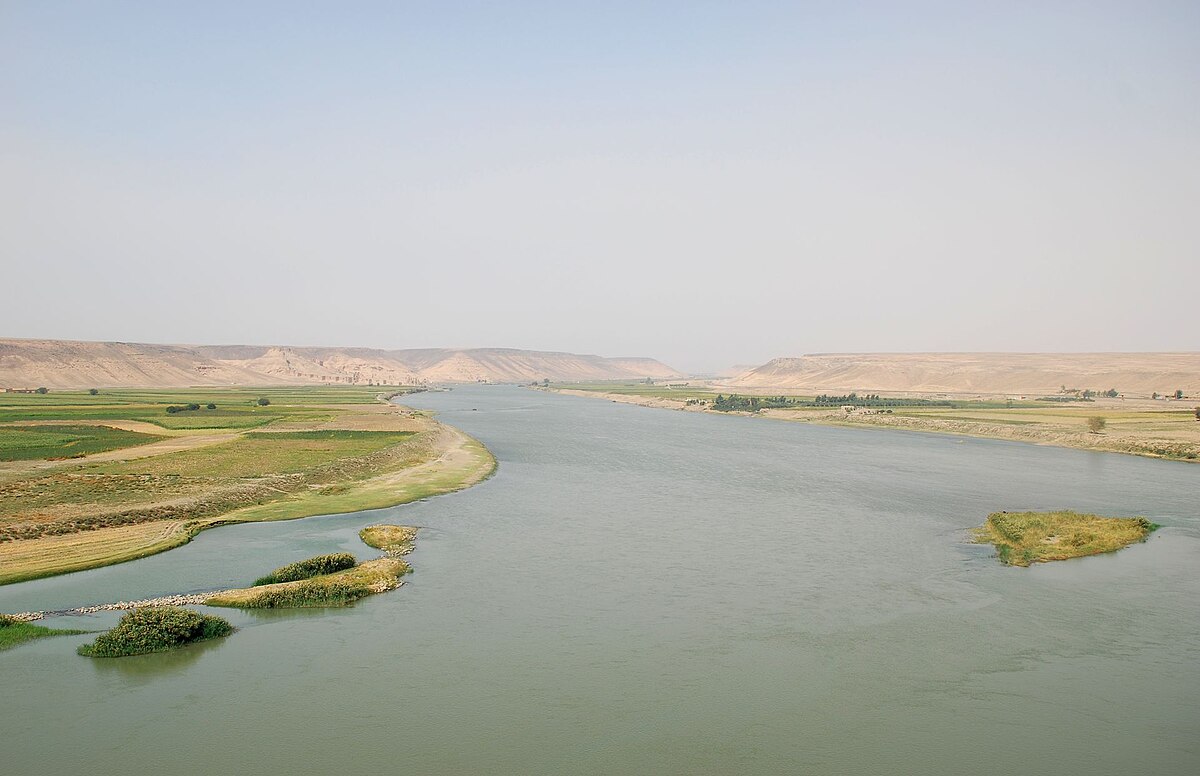
Continuing from the previous entry, we discussed the Four Rivers of Paradise (Sayhan, Jayhan, the Euphrates and the Nile) as a proof that Paradise is on this Earth, when the latter shall be transformed into a “new Earth”. Although the Euphrates and the Nile are two well known rivers, there is some dispute about the exact identity of the Sayhan and Jayhan rivers. I argued that the Jayhan river must correspond to the Gihon river mentioned in the Bible (Genesis 2:13), and perhaps this is the Amu Darya (Oxus River), which is known as Jayhun to the Arabs, but Allah knows best. Imam an-Nawawi has disputed this claim in his Sharh of the Hadith:
اعلم أن سيحان وجيحان غير سيحون وجيحون
“Know that the Sayhan and Jayhan are other than the Sayhun and Jayhun”
According to Imam an-Nawawi, these two rivers are located in the land of the Armenians. He identifies the Jayhan with the Ceyhan River in Anatolia. Qadi Iyad, however, located the Sayhan and Jayhan rivers in Transoxania, i.e., the Jaxartes (Syr Darya) and the Oxus (Amu Darya).
Perhaps a clue to the reality of the Sayhan and Jayhan rivers can be found in another Hadith which describes the Prophet’s Mi’raj (spiritual ascension) to Heaven:

وَرُفِعَتْ لِي سِدْرَةُ الْمُنْتَهَى فَإِذَا نَبِقُهَا كَأَنَّهُ قِلاَلُ هَجَرٍ، وَوَرَقُهَا كَأَنَّهُ آذَانُ الْفُيُولِ، فِي أَصْلِهَا أَرْبَعَةُ أَنْهَارٍ نَهْرَانِ بَاطِنَانِ وَنَهْرَانِ ظَاهِرَانِ، فَسَأَلْتُ جِبْرِيلَ فَقَالَ أَمَّا الْبَاطِنَانِ فَفِي الْجَنَّةِ، وَأَمَّا الظَّاهِرَانِ النِّيلُ وَالْفُرَاتُ

Then I was shown Sidrat ul-Muntaha and its Nabiq fruits which resembled the clay jugs of Hajr, and its leaves were like the ears of elephants, and four rivers originated at its root, two of them were hidden and two were apparent. I asked Gabriel and he said: “The two hidden rivers are in Paradise, and the two apparent ones are the Nile and the Euphrates.”

(Sahih al-Bukhari #3207)

Therefore, the stronger view is that these two rivers (Sayhan and Jayhan) are the two hidden rivers of Paradise which the Prophet (sall Allahu alayhi wa-alihi wasallam) was shown during the Mi’raj and Allah knows best!

Four Rivers of Paradise


بسم الله الرحمن الرحيم

Prophet Muhammad (sall Allahu alayhi wa-alihi wasallam) said:

سَيْحَانُ وَجَيْحَانُ وَالْفُرَاتُ وَالنِّيلُ كُلٌّ مِنْ أَنْهَارِ الْجَنَّةِ

“Sayhan, Jayhan, the Euphrates and the Nile are each from the Rivers of Paradise.”

(Sahih Muslim #7161)

Something similar is affirmed in the Torah:

י  וְנָהָר יֹצֵא מֵעֵדֶן, לְהַשְׁקוֹת אֶת-הַגָּן; וּמִשָּׁם, יִפָּרֵד, וְהָיָה, לְאַרְבָּעָה רָאשִׁים

And a river went out of Eden to water the garden; and from thence it was parted, and became four heads.

יא  שֵׁם הָאֶחָד, פִּישׁוֹן--הוּא הַסֹּבֵב, אֵת כָּל-אֶרֶץ הַחֲוִילָה, אֲשֶׁר-שָׁם, הַזָּהָב

The name of the first is Pishon; that is it which compasseth the whole land of Havilah, where there is gold;

יב  וּזְהַב הָאָרֶץ הַהִוא, טוֹב; שָׁם הַבְּדֹלַח, וְאֶבֶן הַשֹּׁהַם

and the gold of that land is good; there is bdellium and the onyx stone.

יג  וְשֵׁם-הַנָּהָר הַשֵּׁנִי, גִּיחוֹן--הוּא הַסּוֹבֵב, אֵת כָּל-אֶרֶץ כּוּשׁ

And the name of the second river is Gihon; the same is it that compasseth the whole land of Cush.

יד  וְשֵׁם הַנָּהָר הַשְּׁלִישִׁי חִדֶּקֶל, הוּא הַהֹלֵךְ קִדְמַת אַשּׁוּר; וְהַנָּהָר הָרְבִיעִי, הוּא פְרָת

And the name of the third river is Tigris; that is it which goeth toward the east of Asshur. And the fourth river is the Euphrates.

(Genesis 2:10-14)

The Hadith of Sahih Muslim has explicitly identified two known rivers, i.e., the Euphrates and the Nile. The Biblical passage clearly identifies the Euphrates too, called the Perath. Another river mentioned in the Bible is the Chiddeqel or Hiddekel “east of Assyria”. It is generally believed that this is the Tigris River, but it cannot be said for certain. Perhaps this corresponds to the Sayhan river mentioned in the Hadith. I believe that the Gihon river mentioned in the Bible corresponds to the Jayhan river. Although the Bible says that this river encompasses the land of Cush, it is not necessarily referring to the famous Cush in Africa, but perhaps the Hindu Kush region of Central Asia. Therefore, the Jayhan or Gihon is none other than the Oxus river, also known as the Amu Darya. This leaves the Pishon, which has to be the Nile River as mentioned in the Hadith of Sahih Muslim. The French exegete Rashi likewise identified the Pishon with the Nile: “Rashi, the foremost biblical commentator, identifies the Pishon as the Nile River. The word Pishon, he explains, has the connotation of gushing forth and overflowing, and symbolizes the Nile River, which would overflow and irrigate the land of Egypt. Alternatively, the word Pishon is associated with the Hebrew word pishtan, flax, a reference to the ancient Egyptian flax industry, which was watered by the Nile River. According to this view, the area called Havilah refers to somewhere along the Nile region, perhaps Egypt or Sudan. Egyptians were known to have mined gold and precious stones back in pre-dynastic times, especially in the region known in ancient times as Nubia, modern-day southern Egypt and Sudan.”
Both the Hadith and the Biblical passage reinforce the view that Paradise is on this Earth.

Tuesday, November 6, 2018

Erroneous Redefining of Din


بسم الله الرحمن الرحيم

والصلاة والسلام على رسوله الكريم

وعلى آله واصحابه اجمعين

والعاقبة للمتقين

The distinction between Din and Madhhab is observed by modern political thinkers like A. A. Mawdudi, G. A. Parwez and Dr. Israr Ahmad. This idea that Islam is not merely a ’’religion’’ – in the traditional sense of the word – but a total system that encompasses all spheres of life, including social, political and economic, has deeply penetrated the minds of many Muslims who were nurtured on the writings and discourses of these 20th century Islamic ’’intellectuals’’. The modern political fikr is in fact a hotchpotch of various ideological currents including but not limited to Kharijism, Shi’ism, naturalist and materialist philosophies, modernism and Marxism. One can clearly see elements of all these in the warped understanding and approach to Islam by those who advocate this 20th century political fikr. The Shi’i element in particular strongly informs the political dimension of this fikr in the idea that the exact form of government that the Muslims must strive for has been legislated and ordained by Allah. Shi’i polemicists often argue that it is illogical that Islam gives us detailed guidance on apparently mundane matters as hygiene but that the Prophet Muhammad (sall Allahu alayhi wa-aalihi wasallam) could have died without designating his successor. Likewise, the followers of the 20th century political fikr argue that it is critical to establish an Islamic state, because how it is possible that Islam is concerned with apparently routine matters as personal hygiene and dress but not governance or politics. Now in a previous article, I recognized the existence of a political narrative that is intrinsic to Islam, which is especially concerned with liberation of the weak and oppressed and the desire for a charismatic leadership of a saintly Imam, but this should in no way be confused with the modernist fikr of Mawdudi or Sayyid Qutb. Rather, the political narrative which I speak of as being intrinsic to Islam is better expressed in the movement of Mulla Omar’s anti-modernist Taliban (despite their shortcomings), historic Mahdist, apocalyptic uprisings, and the armed revolts of charismatic individuals from the Ahl al-Bayt against the tyrannical and impious Umayyad and Abbasid dynasties – such as the uprising of Imams Zayd, Nafs al-Zakiya, and Muhammad al-Sufi in Taliqan (may Allah have mercy on them). In other words, the political narrative which I subscribe to is apocalyptic, pietist and anti-modernist, in stark contrast to the materialist and modernist fikr of Jamal al-Din al-Afghani, Muhammad Iqbal, Hasan al-Banna, Ali Shariati, ’’Ayatullah’’ Khomeini, Taqi ud-Din an-Nabahani, Abul-Ala Mawdudi, G. A. Parwez, Dr. Israr Ahmad and Abu Muhammad al-Maqdisi.
Returning to the revisionist distinction between Din and Madhhab, it is argued that other world religions, notably Christianity, are examples of madhahib, while Islam is unique in that it is a Din that is not only an alternative to Christianity and Judaism, but to communism, capitalism and other social, political and economic systems. But a distinction with this meaning is not evident in the Quran. The religion or cult of the idol-worshiping pagans, which lacks political, legal and economic dimensions, is nevertheless considered a Din:
هُوَ الَّذِي أَرْسَلَ رَسُولَهُ بِالْهُدَىٰ وَدِينِ الْحَقِّ لِيُظْهِرَهُ عَلَى الدِّينِ كُلِّهِ وَلَوْ كَرِهَ الْمُشْرِكُونَ
He it is Who has sent His Apostle with guidance and the Religion of Truth to manifest it over every Din, even if the polytheists hate it.
(Sura 9:33; 61:9)

لَكُمْ دِينُكُمْ وَلِيَ دِينِ
For you your Din and for me my Din
(Sura 109:6)

Addressing the people of the Scripture, particularly the Christians, Allah says:
يَا أَهْلَ الْكِتَابِ لَا تَغْلُوا فِي دِينِكُمْ
O people of the Book, do not exaggerate in your Din
(Sura 4:171; 5:77)

Regarding the Jews and Judaism, He says:
وَغَرَّهُمْ فِي دِينِهِم مَّا كَانُوا يَفْتَرُونَ
They were deluded in their Din by what they invented
(Sura 3:24)

It is argued that Islam does not observe the same dualism between spirit and matter as Christianity does. That is the dualism which allowed Christendom to accept secularism, the absolute separation of religion and state. Of course Islam rejects the notion that religion and state are to be kept totally separate, since our Religion has a strong legal dimension and expects the state to maintain morality in the public domain. Nonetheless, Islam does recognize a distinction between religious affairs and purely worldly affairs, as the Prophet Muhammad (sall Allahu alayhi wasallam) stated:
إِنْ كَانَ شَيْئًا مِنْ أَمْرِ دُنْيَاكُمْ فَشَأْنَكُمْ بِهِ وَإِنْ كَانَ شَيْئًا مِنْ أُمُورِ دِينِكُمْ فَإِلَىَّ
’’If it is something from the affair of your world, then it is your matter, but if it is something from the affairs of your Religion, then refer to me.’’
(Sunan Ibn Maja #2471)

The Hadith proves that the secular affairs of the Dunya are not included in the Din of Islam. In such matters, the people do not have to refer back to their Religion for detailed instructions. Allah Most High has gives his great creation, humanity, the gift of the intellect. He does not intend to spoonfeed and dictate to us every detail of our worldly life, which would render the use of our own intellect redundant. The detailed instructions of Islam are primarily regarding how we should worship Allah, and ethical, moral issues of right and wrong, allowed and forbidden. In our secular, temporal affairs of this world, Allah says we should conduct them through shura (mutual consultation), and in doing so our decisions will be blessed by Him and yield positive results.

Dr. Israr Ahmad and "Establishing the Din" (42:13)


بسم الله الرحمن الرحيم

والصلاة والسلام على رسوله الكريم

وعلى آله واصحابه اجمعين

والعاقبة للمتقين

Continuing from the previous entry, here I shall examine in depth the ideology and program of the Tanzimi Islami founded by Dr. Israr Ahmad (d. 2010). Like the HT, Tanzimi Islami is dedicated to establishing a Khilafa. But it has a more balanced and moderate approach than the HT or Mawdudi’s Jama’ati Islami. According to Dr. Israr Ahmad, the Tanzimi Islami considers spiritual rectification and reformation as an essential prerequisite for the members of its organization in order to better prepare and arm them for the struggle of establishing a Khilafa. In his book The Call of Tanzeem-e-Islami, Dr. Israr Ahmad outlines his ideology and objectives regarding the issue of the Khilafa. He quotes the Quran:

أَنْ أَقِيمُوا الدِّينَ

That you are to establish the Din

(Sura 42:13)
In Dr. Israr Ahmad’s interpretation, the order to establish the Din means establishment of the Islamic state, the Khilafa. However, both the context and the classical understanding of this Ayah point to the fact that it means the Believers are commanded to establish Tawhid, the worship of Allah alone. This is why the Ayah states that it is the same order that was given to the previous Apostles of Allah mentioned therein: Noah, Abraham, Moses and Jesus. Furthermore, after ordering that the Din be established and that there be no division therein, Allah says that this is a matter that is an enormity for the mushrikin. Hence the context reveals that ’’establish the Din’’ means establishing of Tawhid, the worship of Allah alone. It should also be kept in mind that none of the prophets mentioned by name in the Ayah (Noah, Abraham, Moses and Jesus) ever succeeded in establishing a state or polity with temporal authority. As I’ve said, this is the classical interpretation of the Ayah by the exegetes, for example, as found in the Tafsir al-Jalalayn:
{ شَرَعَ لَكُم مِّنَ ٱلِدِينِ مَا وَصَّىٰ بِهِ نُوحاً } هو أوّل أنبياء الشريعة { وَٱلَّذِى أَوْحَيْنَا إِلَيْكَ وَمَا وَصَّيْنَا بِهِ إِبْرَاهِيمَ وَمُوسَىٰ وَعِيسَىٰ أَنْ أَقِيمُواْ ٱلدّينَ وَلاَ تَتَفَرَّقُواْ فِيهِ } هذا هو المشروع الموصى به، والموحى إلى محمد صلى الله عليه وسلم وهو التوحيد { كَبُرَ } عظم { عَلَى ٱلْمُشْرِكِينَ مَا تَدْعُوهُمْ إِلَيْهِ } من التوحيد { ٱللَّهُ يَجْتَبِى إِلَيْهِ } إلى التوحيد { مَن يَشَاءُ وَيَهْدِى إِلَيْهِ مَن يُنِيبُ } يُقْبِلُ إلى طاعته
In the initial pages of Dr. Israr Ahmad’s book, he reveals the strong influence of Iqbal and Mawdudi on his mind. While Iqbal awakened within him a sense of Muslim nationhood and the desire for a restoration of Muslim power and dominion, it was Mawdudi who ’’filled in the details left bare by by Iqbal’s general outline’’ (p. 11). Dr. Israr absorbed into his own psyche and ideology the novel re-interpretation and re-definition of the terms Ilah, Ibada and Din. It is the redefining of these terms which forms the basis of Mawdudian thought and separates it from the orthodox understanding and approach to Islam. Although clearly influenced by Mawdudi and having formerly been a member of the Jama’ati Islami’s student wing, Dr. Israr’s break with the JI is significant in that it reveals a major flaw with the latter. The JI, under the direction of Mawdudi, entered into mainstream, electoral politics, but till this day has never succeeded in forming a government. Dr. Israr, however, rejected participation in the system, noting that it is rigged to maintain the power of the feudalists and capitalists. It seems, then, that his organization seeks to bring about the establishment of the Din, as it understands it, by working outside the system, at a grassroots level, thereby not having to compromise its core values, unlike the JI which has entirely immersed itself in the dirty game of electoral politics, thereby sapping its initial dynamism and appeal. Nevertheless, the Tanzimi Islami, which Dr. Israr founded in 1975, has been even less successful in gaining support of the masses or bringing about an Islamic state than the JI. Having a talent for explaining the Quran, many Muslims simply tuned in to hear Dr. Israr’s discourses on the Scripture, but never really showed any interest or willingness to go further and join Dr. Israr in launching a dynamic movement to establish the Din. His ’’movement’’, therefore, remained restricted to lectures, discourses and discussions, and has never been able to reach the next critical step of its own agenda. I therefore coldly conclude that the Tanzim has been a failure. It certainly did not acquire the help or blessing of Allah Most High in attaining its stated objective, or even coming close to that. It is not even particularly successful in being a simple educational and religious organization, judging by the increasing lack of followers and enthusiasm among its current members. And since the death of Dr. Israr, the Tanzim has lost the only individual it had who exhibited at least some charisma and name recognition.
Next, Dr. Israr falsely claims that the divine punishments that the Muslims have had to face in modern times, specifically what happened and is continuing to happen in places like Bosnia, Chechnya, Kashmir, Afghanistan, etc., is due to their failure to strive for and establish the Islamic state: ’’put bluntly, we are being punished by the Heavens because we have failed to fulfill the duty of establishing Islam on earth’’ (p. 15). As I have explained previously, Muslims are not obligated to establish the Khilafa or Islamic state, as these are in fact divine favors and compensation for the righteousness of the Muslims. In other words, it is the prerogative of Allah Himself to establish for us the Khilafa. Our duty is to worship Allah alone and be righteous, observing all His commandments and strictly avoiding His prohibitions. According to the Ayat al-Istikhlaf, Allah has promised to establish the Believers in the land as He established those who came before them on the condition that they have faith, perform good deeds, worship Him, not associate any partner with Him, establish the Salat, pay the Zakat and obey the Apostle Muhammad – peace be upon him (Sura 24: 55-56). Therefore, the cause for the present humiliation and degradation of the Muslims, undoubtedly a divine punishment, is our spiritual and moral corruption, and our failure to fulfil the conditions that have preceded as outlined in the Ayat al-Istikhlaf.
To be continued  إن  شاء الله

Reality of Khilafa (Part 5)


بسم الله الرحمن الرحيم

والصلاة والسلام على رسوله الكريم

وعلى آله واصحابه اجمعين

والعاقبة للمتقين

Months ago I wrote an article detailing my view on the significance of the institution of Khilafa and my understanding of Ayat al-Istikhlaf. In the first line of that article I articulated my thesis: ’’The institution of Khilafah is not a fundamental component of the Religion of Islam but instead a manifestation of Allah’s favor and blessing upon the deserving community of Muslims.’’ Consequently, the fact that the Muslims today are bereft of Khilafa is a sign that we have lost some favor in the sight of Allah, due to our corruption, and are therefore not deserving of it. The Children of Israel before us were given their version of Khilafa in the land, the monarchy beginning with kings Saul, David and Solomon (peace be upon them). But when the Israelites became corrupt, that institution, an example of God’s divine favor upon them, was gradually eroded and finally terminated altogether at the hands of Nebuchadnezzer in 589 BCE. If we examine the history of our Umma, we were originally blessed with the Rightly-Guided Khilafa, the four righteous caliphs Abu Bakr, Umar, Uthman and Ali (may Allah be pleased with them). However, following the same pattern as the Israelites before us, that divine blessing and institution of Khilafa was eroded into dynastic rule of tyrannical and impious kings, and then terminated altogether at the hands of Hulagu Khan in 1258 CE.
A false understanding of the reality of Khilafa crept into the Muslim world in the 20th century, championed by a certain Taqi ud-Din an-Nabahani, founder of Hizb ut-Tahrir. According to this new ideology, the Khilafa is not only essential for the practice of Islam, it is its most important component without which there can be no Islam. It is this erroneous idea that motivated other groups (al-Qa’ida, Islamic State and others) to pick up arms and even commit acts of terrorism in order to establish the Khilafa. Other groups that adhere to this ideology are apparently non-violent, and advocate the establishment of the Khilafa through peaceful means. Most, however, are only non-violent and unwilling, for the moment, to pick up arms for their cause as a matter of strategy and not creed. HT itself seeks to establish the Khilafa through stealth. It works to secretly indoctrinate military officers of various Muslim states, aiming to motivate a coup d’état that will be the basis for establishing the Khilafa. This top down approach that HT aims for was no doubt inspired by the various Arab military coups in Egypt, Syria, Iraq and Libya during the 20th century. It also reveals the fact that HT is not really a religious, Islamic organization. It resembles more the Ba’ath Party and bears so many fundamental characteristics of fascism and revolutionary Marxism.
Those who argue that Islam cannot be practiced without the institution of Khilafa point to things like the collection of Zakat, the establishment of Islamic courts, the organizing and commanding of armies for waging Jihad, and even the appointment of prayer leaders and sermonizers. In short, it becomes impossible for Muslims to practice much of their Religion, including very fundamental parts of it, in the absence of a Khilafa. My answer to this argument is twofold. Firstly, it is not necessarily impossible or even problematic to practice or implement many of these things in the absence of a Khilafa. Secondly, if, theoretically, there is something in our Religion which cannot be implemented without the institution of Khilafa, then it is certainly not a fundamental part of it and definitely not obligated upon us. Although the world of Islam is currently bereft of a unified Khilafa, the Muslims are nonetheless under the authority of numerous states, republics, kingdoms, sultanates, emirates and sheikhdoms. Although this division of the Muslim Umma into these multiple polities is not ideal, nor are their particular forms of government ideal from Islam’s perspective, they are nevertheless valid and Muslims are obligated to acknowledge their temporal authority and be in a state of obedience to them. These polities have the authority to discharge necessary functions like collecting the Zakat, establishing Islamic courts, waging Jihad in defense of the Religion, etc. Furthermore, in scenarios in which a Muslim community does not even have an autonomous state, such as if they are under colonial rule or foreign occupation by the non-Muslims, or living as minorities in non-Muslim states, they still possess the authority to organize voluntary collection of Zakat and establishment of voluntary or unofficial tribunals to execute Islamic family laws. By voluntary, I mean that Muslims are obligated to pay the Zakat as a religious duty, but in the absence of a state that will discharge the duty of collecting and distributing Zakat, Muslim individuals and families voluntary discharge their religious obligation by entrusting their Zakat to a non-government Islamic organization that will distribute it on their behalf, or they directly give their Zakat to individuals who are worthy of receiving it. In all these scenarios, the religious duty of paying Zakat will be fulfilled. It is my thesis that far from being obligated to establish a unified, global Khilafa, Muslims are not even obligated to establish a state or polity. Of course it is ideal that Muslims have a state or polity to ease and facilitate the practice and propagation of Islam. When sayyidina Hubab b. al-Mundhir (radi Allahu anhu) proposed, after the death of the Prophet Muhammad (sall Allahu alayhi wasallam), that the Ansar and Muhajirin go their separate ways and establish two separate polities, he was not proposing something that was haram or forbidden by our Religion. His proposal was rejected because it was not ideal, and it was superior to have a single polity under a unified Khilafa for the entire Umma to better facilitate the practice and propagation of Islam. In those critical days, the establishment of the unified, rightly-guided Khilafa through which Islam spread far and wide, and the Muslims enjoyed temporal power to be able to conquer Jerusalem, Damascus, Egypt, Iran, North Africa, Transoxania, etc., that was a takwini affair, the manifestation of Allah’s will, and not tashri’i, meaning something legislated by Allah that the Muslims were obligated to do.

Qadiani Argument Answered from Surah 5:116-117

بسم الله الرحمن الرحيم يا نبي سلام عليك In the Name of Allah, the Rahman, the Merciful Peace be upon you, O Prophet The Qadianis, who are ob...