Sunday, August 14, 2016

Did Jesus (Eisa Ibn Mariam) عليه السلام Raise the Dead Back to Life?

I shared with the respected reader the essential and basic proofs from the Suhuf-i-Mutahharah (Holy Qur’an) where it is proven that it is impossible for the dead to return to this world, and that is the divine ordinance of Allah Himself. Once He grips a person’s soul and the decision of death is made for it, then it is withheld from returning to this world (Surah 39:42)
However, those people, blind followers of the Mullas and storytellers, object to this by claiming that the Promised Messiah Jesus son of Mary (peace be upon him) was bestowed with many miracles, one of which was raising the dead back to life. In this context two passages of the Holy Qur’an should be carefully analyzed:
وَأُحْيِي الْمَوْتَىٰ بِإِذْنِ اللَّـهِ
“And I (Jesus) give life to the dead, by Allah’s permission.” (Surah 3:49)
وَإِذْ تُخْرِجُ الْمَوْتَىٰ بِإِذْنِي
“And when you (Jesus) bring forth the dead by My permission.” (Surah 5:110)
At the outset, let the respected reader be made aware that the correct method of interpretating (Tafsir and Ta’wil) of the Holy Qur’an requires that its Verses be interpreted and understood in light of the other Verses, since the Holy Qur’an is a holistic text and it would be absurd to interpret a Verse in isolation of the broader context and teachings of the Holy Qur’an.
The Christians believe that Jesus son of Mary raised the dead back to life by his own power and authority. Allah Most High belies such a false and idolatrous belief in the two verses I have quoted where it is clearly mentioned that when Jesus brought forth the dead he did so only by Allah’s Name, Permission, Power and Authority.
Therefore we already see a major discrepency between Islam and so called Christianity with regard to the reality of the Messianic miracles.
According to the Christian Bible, Jesus raised Lazarus back to life and made him come out of his tomb. In the eleventh chapter of the Gospel according to John the story is mentioned in detail that Jesus reached the tomb of Lazarus four days after he had been buried (John 11:14). If this is true it would mean that Jesus literally raised a dead person back to life who had been dead for four days, meaning the Angel of Death had already taken his soul away completely and God had decreed an irreversible death for him. Such a story, at least with these details, clearly contradicts the teachings of the Holy Qur’an that once the ordinance of death is proclaimed for any human being it is impossible that he or she ever return to this world:
فَيُمْسِكُ الَّتِي قَضَىٰ عَلَيْهَا الْمَوْتَ
 (Surah 39:42)
Furthermore, neither the Holy Qur’an makes any specific mention of this Lazarus story nor is there any Hadith reported from the Prophet (Sallallahu ‘alayhi wasallam) which mentions anything about Lazarus or about Jesus (peace be upon him) raising someone to life who had already been buried in a grave for several days.
*Note: although Christians claim that Jesus raised Lazarus and other dead people back to life on his own personal authority supposedly proving that he is divine and God in the flesh, the eleventh chapter of the Gospel of John clearly mentions that Jesus raised Lazarus back to life by praying to God “the Father” Who heard his supplication: “Then they took away the stone from the place where the dead was laid. And Jesus lifted up his eyes, and said, Father, I thank thee that thou hast heard me.

And I knew that thou hearest me always: but because of the people which stand by I said it, that they may believe that thou hast sent me.” (John 11:41-42 KJV) So we see from the words of Jesus himself, as quoted in the Gospel of John, that Jesus performed this miracle of raising Lazarus to life in order to prove that he was sent by God, and before performing the miracle he prayed to God who heard and thus answered his supplication – thus negating the Christian belief that Jesus raising the dead to life is a proof of his own divinity and that he raised the dead to life on his own personal authority and power.
Then it is mentioned in the Gospel of Matthew that after the soul of Jesus was taken up while he was on the cross (which does not necessitate death but the correct meaning is that he fainted and lost conciousness):
“And the graves were opened; and many bodies of the saints which slept arose, and came out of the graves after his resurrection, and went into the holy city, and appeared unto many.” (Matthew 27:52-53)
Again, the Holy Qur’an makes no mention of such a story. Neither is such an apparently wonderous event reported in any extra-Biblical historical source (for example Josephus or any other historian of the Antiquity), despite the fact that the Gospel of Matthew claims that these ancient dead people came out of their tombs and appeared to multitudes of people in the holy city of Jerusalem. That obviously qualifies for a very extraordinary event which at the very least should have been reported by at least one other historical source.
Returning to the discussion of the two verses quoted from the Holy Qur’an which reference this miracle of the Messiah raising the dead to life (3:49 and 5:110), I invite the reader to consider the very powerful interpretation of these verses that satisfied the heart and mind offered by the Mujaddid of the 14th century of Hijrah, Hadrat Mirza Ghulam Ahmad of Qadiyan. He says:
“Once I saw in a dream that my fourth son Mubarak Ahmad had died. Within a few days, he had a high fever and lost conciousness eight times. The last time it appeared as if his life had come to an end. I began my supplication on his behalf and while I was so occupied I heard everyone say: ‘Mubarak Ahmad has died.’ I placed my hand on him and there was no pulse or breathing and his eyes seemed petrified like those of a corpse. But my supplication brought an extraordinary change and by my putting my hand on him he began to revive and the signs of life returned. Then I announced in a loud voice to those present: If Jesus son of Mary brought any dead person back to life, it would have been nothing more than this. That is, he would have revived someone near to death like this and not one whose soul might have reached the heavens and conveyed by the Angel of Death to its last resting place.”

Reference: Ruhani Khaza’in, v.18, p.598; Nuzul-ul-Masih, p.220
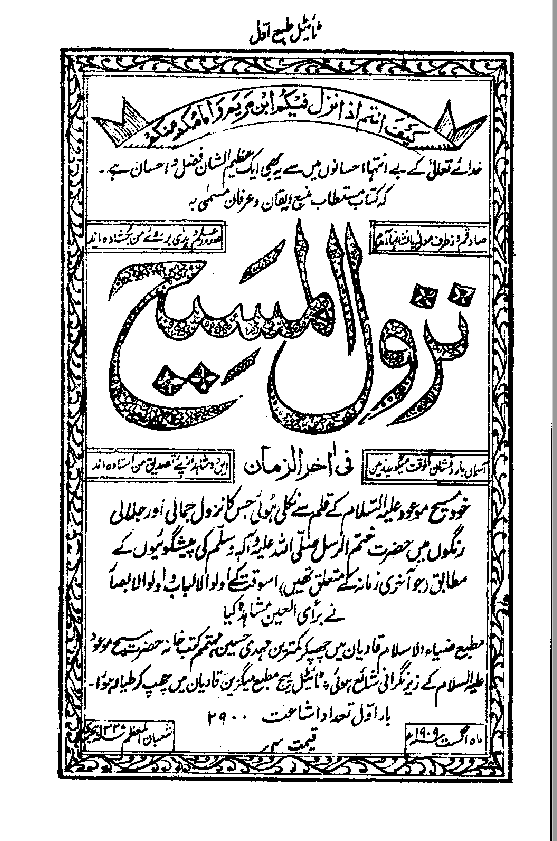

The interpretation and explanation of Hadrat Mirza sahib matches perfectly with the two quoted verses of the Holy Qur’an (3:49 and 5:110) and harmonizes them with the rest of the verses of the Holy Qur’an which make it explicitly clear that the dead upon whom the ordinance of death has been passed and whose souls have fully and completely departed from their bodies are unable to ever return to this temporal world. Thus the meaning of the word الموتى needs to be re-examined in the context of it being used in 3:49 and 5:110.
The Prophet (Sallallahu ‘alayhi wasallam) has used the word الموتى with respect to those technically living and breathing people who are in the throes of death but not as of yet medically pronounced as dead. Hence the meaning of الموتى is also قریب المرگ (close to death). For example, the Prophet (Sallallahu ‘alayhi wasallam) said:
عَنْ أَبِي هُرَيْرَةَ ، قَالَ : قَالَ رَسُولُ اللَّهِ صَلَّى اللَّهُ عَلَيْهِ وَسَلَّمَ : " لَقِّنُوا مَوْتَاكُمْ لا إِلَهَ إِلا اللَّهُ ، فَإِنَّهُ مَنْ كَانَ آخِرُ كَلِمَتِهِ لا إِلَهَ إِلا اللَّهُ عِنْدَ الْمَوْتِ ، دَخَلَ الْجَنَّةَ يَوْمًا مِنَ الدَّهْرِ ، وَإِنْ أَصَابَهُ قَبْلَ ذَلِكَ مَا أَصَابَهُ
Translation: Abi Hurairah (Allah be pleased with him) said: The Messenger of Allah (Sallallahu ‘alayhi wasallam) said: “Encourage your Dead to say La Elaha illa Allah, for whoever’s last word is La Elaha illa Allah at the time of death he shall enter Jannah…”
In another Hadith, the Prophet (Sallallahu ‘alayhi wasallam) is reported to have said:
عَنْ أَبِي هُرَيْرَةَ ، عَنِ النَّبِيِّ صَلَّى اللَّهُ عَلَيْهِ وَسَلَّمَ ، أَنَّهُ قَالَ : " إِنَّ الْمَيِّتَ تَحْضُرُهُ الْمَلَائِكَةُ ، فَإِذَا كَانَ الرَّجُلُ الصَّالِحُ ، قَالُوا : اخْرُجِي أَيَّتُهَا النَّفْسُ الطَّيِّبَةُ كَانَتْ فِي الْجَسَدِ الطَّيِّبِ
Translation: Verily, the Angels are present before the dead, so if he was a pious man, they say: “Come forth, O pure soul that was in a pure body…”
These and other Ahadith prove that the Prophet (Sallallahu ‘alayhi wasallam) applied to the words Mawtaa and Mayyit which linguistically means “dead” to people who were not technically or from a medical point of view dead, but rather, close to dead, upon their death bed, and in the grip of death.
In this way, Hadrat Mirza sahib has clarified the reality of Jesus’s miracle of raising the dead to life so as to remain in harmony with the general principle laid down in the Holy Qur’an that it is impossible for those upon whom the Ordinance of Death has been passed that their souls should ever return to this mundane existence (Dunya).


Saturday, August 13, 2016

Pir Mehr Ali Shah Affirms that Prophet صلى الله عليه وآله وسلم was affected by Magic

Pir Mehr Ali Shah rahmatullah alaih wrote:
واقعہ مسحوریّت ذات بابرکات جناب سرور کائنات صلی اللہ علیہ وسلم صحیح و دروست ہے
The incident of magic being done to the blessed essence of the Prophet (Sallallahu ‘alayhi wasallam) is authentic and true.


Reference: Fatawa Mehria; p.14


Magic is not Real

Is Magic (Sihr) Real?
Continuing from my previous entry, the subject of magic has needlessly created controversy within the Muslim ummah. The Suhuf-i-Mutahharah (Holy Qur’an) is very explicit when it describes the art of the magicians as fantasy and imaginary, not having any reality:
وَأَلْقِ مَا فِي يَمِينِكَ تَلْقَفْ مَا صَنَعُوا إِنَّمَا صَنَعُوا كَيْدُ سَاحِرٍ وَلَا يُفْلِحُ السَّاحِرُ حَيْثُ أَتَىٰ
“And throw that which is in your right-hand: Quickly will it swallow up that which they have faked. Verily, what they have faked is not but a magician’s trick. And the magician will never succeed no matter where he goes.” (Surah 20:69)
It is therefore a mistake to believe, as some foolish or ignorant people do, that the Pharoanic magicians actually possessed the skill to transform in reality their ropes and sticks into self-moving objects. Rather, they only made that appear to be the case through pure trickery on the eyes of the people (that which we refer to as an optical illusion), as Allah Most High says;

قَالَ أَلْقُوا فَلَمَّا أَلْقَوْا سَحَرُوا أَعْيُنَ النَّاسِ وَاسْتَرْهَبُوهُمْ وَجَاءُوا بِسِحْرٍ عَظِيمٍ

“(Moses) said: ‘Throw ye!’ So when they threw they bewitched the eyes of the people and caused them to panic, for they performed a great feat of magic.” (Surah 7:116)
The great companion and second successor of our beloved Prophet, Sayyidina Umar b. al-Khattab (may Allah be pleased with him) was once asked about the Gheelaan (Ghouls):

ذكرنا عند عمر رضي الله عنه الغيلان فقال: انّه لا يستطيع شيءٌ أن يتحوَّل عن خلق الله الّذي خلقه, ولكن فيهم سحرة كسحرتكم, فاذا أحسستم من ذلك شيئاً فأذِّنوا

“Asir b. Amro said: We mentioned the Gheelaan in the presence of Umar may Allah be pleased with him, so he said: ‘Verily he (the Ghoul) cannot transform anything from the creation of Allah which He has created, but there are magicians from among them (the Jinn) like your magicians. So if you perceive something of that (the Gheelaan), then immediately proclaim the Adhaan.”

Reference: Jaami’ al-Hadith of Imam Suyuti

The above narration demonstrates the fact that Sayyidina Umar (May Allah be pleased with him) firmly believed that no one except Allah has the power to transform any of His creation. No human magician with his magic, nor any jinn, ghoul, or any other “supernatural” creature has the ability to transform any of Allah’s creation. Yes, they can at most, with their dark arts of trickery and illusion, make it appear as though an object has been transformed, or that a static object is in motion when in reality it is not.

Among the great Imams from the early Muslims, Imam Abi Hanifah (may Allah have mercy on him) was well known for denying that magic has any reality or real effect:

قال أبا حنيقة: لا حقيقة للسحر

Reference: Tafsir Ibn Kathir


Another eminent Hanafi jurist and scholar, Abu Bakr al-Razi al-Jassas (d. 942 C.E) likewise denied the reality of magic. He also denied specifically all narrations about a Jewish woman doing magic on the Prophet (Sallallahu alaihi wasallam), or the narration about Lubaid b. al-Asim who allegedly bewitched the Prophet (Sallallahu alaihi wasallam) معاذ الله

Reference: Ahkaam ul-Qur’aan; v.1 p.52, 60


Among the Shafi’ies, the Imam Abu Ja’far al-Istarabadhi also denied the reality of magic, as mentioned by Ibn Hajar al-Asqalani in his monumental Fath al-Bari (v.10, p.222)


Ibn Hazm also argued passionately against the contention that magic is real. He said that the people of truth do not hold that magic has any real effect or ability to transform anything, or change the nature of anything, as this is only the Power of Allah which He manifests as a miracle at the hands of the Prophets. This is quite a compelling argument, for otherwise to hold that magic has real power to alter the natural laws or transform objects supernaturally would mean that the magicians are on par with the Prophets and there is no real difference between a magician’s sorcery and a Prophet’s miracle (God forbid).


Reference: Al-Fisl; v.5, p.99, 103


Thursday, August 11, 2016

Was Magic Done on our Prophet (SAW)? By all Means NO

Was Magic Done on the Prophet (Sallallahu alaihi wasallam)? NO!

Sihr (magic, sorcery, wizardry, jadoo, hocus pocus, etc.) is nothing but the art of illusion and deception. It has no reality or truth to it. The Saahir (magician) only has the skill to create an illusion or “trick” that deceives the eyes of an ordinary person, but apart from this, magic has no real or permanent effect. Recounting the incident of the great Prophet Moses (peace be upon him) and his duel with the pharoanic magicians, Allah Most Exalted says:
وأَلْقِ مَا فِي يَمِينِكَ تَلْقَفْ مَا صَنَعُوا إِنَّمَا صَنَعُوا كَيْدُ سَاحِرٍ وَلَا يُفْلِحُ السَّاحِرُ حَيْثُ أَتَىٰ
“And throw that which is in your right hand [O my beloved Moses] it shall swallow that which they have crafted. Verily, that which they have crafted is nothing but the trick of a magician, and the magician can never succeed wherever he may be.” [Surah 20:69]
The previous verse explicitly mentions that
يُخَيَّلُ إِلَيْهِ مِن سِحْرِهِمْ
“It seemed to him from their magic…” (20:66)
This Ayah proves that Sihr is only Khayaalee (imaginary) and not Haqeeqee (real).

Elsewhere in the Holy Qur’an, Allah emphasizes the point that the magic which the pharoanic magicians performed only effected the eyes of the people (i.e. optical illusion) and thus did not have any reality to it:
فلَمَّا أَلْقَوْا سَحَرُوا أَعْيُنَ النَّاسِ
“So when they threw they bewitched the eyes of the people…” (Surah 7:116)

Based on these precise and manifest verses of the Holy Qur’an, great Imams and scholars of Islam like Abi Hanifah and Abu Bakr al Jassas held the strong view that magic is only imaginary and not real. Abu Bakr al-Jassas in particular emphasized this point and denied the fabricated story about the Jewish man Lubaid b. al-Asim (L.A) doing magic on our beloved and pure Prophet (Sallallahu ‘alaihi wasallam).

In fact, the Holy Qur’an is quite explicit that anyone who believes that the Prophet (Sallallahu ‘alayhi wasallam) was, God forbid, bewitched, is in the same category as the Zaalimeen (wicked, criminal and evil people):
وَقَالَ الظَّالِمُونَ إِن تَتَّبِعُونَ إِلَّا رَجُلًا مَّسْحُورًا
And the wrongdoers say: “Verily you all follow a man that has been effected by magic.” (Surah 25:8)
In light of this categorical denial of Allah in the Holy Qur’an that magic can be done, least of all to our Prophet (Sallallahu ‘alaihi wasallam), and that anyone who believes or says the latter is from among the wrongdoers, than how can any Muslim with an iota of faith in his heart, and an atom of love for the beloved Prophet (Sallallahu ‘alayhi wasallam) accept a Riwaayah from Bukhari sharif or any other book of Hadith which says that magic was done on the Prophet (Sallallahu ‘alayhi wasallam)?!
The fact of the matter is that the story of Lubaid b. al-Asim must be rejected since it clearly contradicts the pronouncement of the Holy Qur’an. Even if the sanad of that Hadith meets the conditions for authenticity according to the principles of the Muhaditheen, the truth is that such a Riwaayah must still be discarded and rejected for two reasons: 1. It is clearly contradicting the Holy Qur’an, which being the Words of Allah, supercedes all Hadith and narrations which are not 100% error-free. For example, a narrator of Hadith can make a mistake or be in error, but the Holy Qur’an, being the Book of Allah, is completely free of any human error. Although we particularly revere Bukhari sharif and Muslim sharif as the most authentic collections of Hadith, yet even these two books do not enjoy the supreme status and position of the Holy Qur’an which stands in judgment over all Ahadith and Riwayaat. (2) The Hadith of Lubaid b. al-Asim, even if its Sanad meets conditions of authenticity according to the principles laid down by the Muhaditheen, is still only a Khabr al-Ahad (solitary report). The Holy Qur’an and those Ahadith which are Mutawaatir (mass-narrated at every level so that there can logically be no doubt as to their veracity) must always take precedence, especially in matters of creed, over any solitary report. There can be no question about prefering the verses of the Holy Qur’an to a Riwaayah which is only a solitary report and not at all mass-narrated.

Furthermore, the various narrations which describe the story of Lubaid b. al-Asim contradict each other in their details. Without going into too much detail here, I refer the reader who is interested in a deeper analytical study of the Riwaayah in question to consult the following brilliant article:


Tuesday, April 12, 2016

Can the Dead Return to this World? (Part 1)


?Can the Dead Return to this World

بسم ا الرحمن الرحيم

As indicated in one of my earlier entries this month, I am going to initiate a series of articles on my blog concerning the subject of the return of the dead to this world. At the outset I want to make it clear to the reader that, based on my deep research into this subject, taking into account the teachings of the Holy Qur’an and the authentic Hadith (traditions of the Prophet peace be upon him and his family), I have come to the inescapable conclusion that one of the principle ideas of Islam is that the souls of the dead cannot ever return to this world.

In this first article I simply want to present the reader with the foundational verses of the Holy Qur’an. This will be a rather elementary/cursory exercise, but its purpose is to set the groundwork so we can tackle the issue even further with a firm footing. Allah Most High says:

وَ حَرٰمٌ عَلٰی قَرۡیَۃٍ اَہۡلَکۡنٰہَاۤ اَنَّہُمۡ لَا یَرۡجِعُوۡنَ۞

It is forbidden for [the people of] a town which We have destroyed that they should return. (Surah 21:95)

In another passage, Allah Most High says:

حَتّٰۤی اِذَا جَآءَ اَحَدَہُمُ الۡمَوۡتُ قَالَ رَبِّ ارۡجِعُوۡنِ۞

لَعَلِّیۡۤ اَعۡمَلُ صَالِحًا فِیۡمَا تَرَکۡتُ کَلَّا ؕ اِنَّہَا کَلِمَۃٌ ہُوَ قَآئِلُہَا ؕ وَ مِنۡ وَّرَآئِہِمۡ بَرۡزَخٌ اِلٰی یَوۡمِ یُبۡعَثُوۡنَ

Until when comes unto one of them Death, he says: “O my Lord, send me back...so that I may perform deeds of piety in that [world] I left behind.” But no! It is simply a word he says. And before them is a barrier until the Day they are raised up. (Surah 23:99-100)

*This important passage of the Holy Quran makes it quite plain that the souls of the deceased are forever prevented from returning back to this world. Allah says that there is a Barzakh (partition or barrier) which cannot be encroached upon that separates the souls of the dead from this world. It will not come to an end until the Day of Resurrection when the dead are brought back to life at the time of the end of this world [Dunya]. Until then, it is absolutely impossible and inconceivable that the souls of the dead be brought back to life in this world.

Elsewhere in the Holy Quran, Allah says:

اَللّٰہُ یَتَوَفَّی الۡاَنۡفُسَ حِیۡنَ مَوۡتِہَا وَ الَّتِیۡ لَمۡ تَمُتۡ فِیۡ مَنَامِہَا ۚ فَیُمۡسِکُ الَّتِیۡ قَضٰی عَلَیۡہَا الۡمَوۡتَ وَ یُرۡسِلُ الۡاُخۡرٰۤی اِلٰۤی اَجَلٍ مُّسَمًّی ؕ اِنَّ فِیۡ ذٰلِکَ لَاٰیٰتٍ لِّقَوۡمٍ یَّتَفَکَّرُوۡنَ

Allah takes the souls at the time of their death, and those that die not during their sleep. So He withholds those [souls] upon whom death has been decreed, and sends back the others until a term appointed. Verily, in that are Signs for a people who reflect. (Surah 39:42)

This verse reveals the fact that the souls of the dead are being withheld unlike the souls of those that sleep. The obvious meaning is that the souls of the dead are withheld by Allah from returning to this world, whereas the souls of those that are sleeping are returned when they awaken from their slumber. This is a clear delineation between death and sleep. Whereas a person sleeps, on average for a few hours in the night, his soul is taken up by Allah but then returned to his body when he awakens. However, when death is decreed for someone, Allah withholds his souls from returning to this world. If the soul of someone taken by Allah returns to this world, by definition it means that person was not dead but in another state such as sleep, coma, or temporary unconciousness.These are the three fundamental Ayaat Muhkamaat (fundamental verses with no ambiguous meaning) that establish the Islamic principle that the souls of the dead cannot return to this world ever.Apart from these verses of the Holy Quran, there is a Hadith Qudsi regarding the martyrs:

حَدَّثَنَا يَحْيَى بْنُ حَبِيبِ بْنِ عَرَبِيٍّ ، حَدَّثَنَا مُوسَى بْنُ إِبْرَاهِيمَ بْنِ كَثِيرٍ الْأَنْصَارِيُّ ، قَال : سَمِعْتُ طَلْحَةَ بْنَ خِرَاشٍ ، قَال : سَمِعْتُ جَابِرَ بْنَ عَبْدِ اللَّهِ ، يَقُولُ : لَقِيَنِي رَسُولُ اللَّهِ صَلَّى اللَّهُ عَلَيْهِ وَسَلَّمَ ، فَقَالَ لِي : " يَا جَابِرُ ، مَا لِي أَرَاكَ مُنْكَسِرًا ؟ قُلْتُ : يَا رَسُولَ اللَّهِ ، اسْتُشْهِدَ أَبِي ، قُتِلَ يَوْمَ أُحُدٍ وَتَرَكَ عِيَالًا وَدَيْنًا ، قَالَ : أَفَلَا أُبَشِّرُكَ بِمَا لَقِيَ اللَّهُ بِهِ أَبَاكَ ؟ قَالَ : قُلْتُ : بَلَى يَا رَسُولَ اللَّهِ ، قَالَ : مَا كَلَّمَ اللَّهُ أَحَدًا قَطُّ إِلَّا مِنْ وَرَاءِ حِجَابٍ ، وَأَحْيَا أَبَاكَ فَكَلَّمَهُ كِفَاحًا ، فَقَالَ : يَا عَبْدِي ، تَمَنَّ عَلَيَّ أُعْطِكَ ، قَالَ : يَا رَبِّ ، تُحْيِينِي فَأُقْتَلَ فِيكَ ثَانِيَةً ، قَالَ الرَّبُّ عَزَّ وَجَلَّ : إِنَّهُ قَدْ سَبَقَ مِنِّي أَنَّهُمْ إِلَيْهَا لَا يُرْجَعُونَ ، قَالَ : وَأُنْزِلَتْ هَذِهِ الْآيَةُ وَلا تَحْسَبَنَّ الَّذِينَ قُتِلُوا فِي سَبِيلِ اللَّهِ أَمْوَاتًا

Translation: Musã bin Ibrahim bin Kathir Al-Ansãri narrated: "I heard Talhah bin Khirãsh say: 'I heard Jãbir bin 'Adullãh saying: "The Messenger of Allah (Sallallahu alayhi wasallam) met me and said to me: '0 Jãbir! Why do I see you upset?' I said: '0 Messenger of Allah! My father was martyred [on the Day of Ubud] leaving family and debt behind." "He (Sallallahu alayhi wasallam) said: 'Shall I give you news of what your father met Allah with?" He said: "But of course 0 Messenger of Allah!' He said: 'Allah does not speak to anyone except from behind a veil, but He brought your father to speak to Him directly. He said: "[0 My slave!] Do you wish that I give You anything?' He said: '0 Lord! Give me life so that I may fight for You a second time.' So the Lord [Blessed and Most High] said: 'It has been decreed by Me That they shall not return."' He said: "So this Ayah was revealed: Think not of those as dead who are killed in the way of Allah." (Tirmidhi; Hadith 3010)

The Hadith Qudsi leaves no room for any misconception that the life enjoyed by the martyrs is a spiritual life in the blissful gardens of Jannah which is another, parallel world or dimension. The martyrs are not living in this world [Dunya]. Furthermore, when Allah asks the martyrs what they wish for, they will ask Allah to allow them to return to this world so that they can be martyred a second time and taste its sweetness once more (due to the immense reward associated with martyrdom). However, Allah will politely decline this request of the martyrs because He has already decreed, an inalterable divine law in operation, that their souls can never return to this world.

In summary, these are the fundamental proofs from the Quran and Sunnah that the souls of the dead cannot return to this world. To believe otherwise is bordering on rejection of the divinely-revealed Texts to say the least.

Saturday, April 9, 2016

Deobandi Admits Early Ulama Disagreed with their Belief that the Prophets are Alive


Among the more serious deviations of the Deobandi sect is its assertion that the Prophets of Allah are alive in this world with a bodily/physical life. Upon closer inspection of the Deobandi doctrine in this regard it becomes plain for all to see that the Deobandis understand the Hadith “The Prophets are alive in their graves, praying” with such rigid literalism as to disturb anyone with a sound intellect. They essentially imagine that the Prophets are living, breathing and moving within the physical confines of their earthen graves. If the grave of a Prophet were to be accidentally opened one would behold, according to this belief, a living, breathing and moving Prophet like any other living person in this world!

One of the flawed arguments which the Deobandis and other sects set forth to back up this fallacious doctrine is that after the passing away of the Prophet (peace be upon him) his wives were forbidden to remarry. That is because since the Prophet (peace be upon him) is still alive with a wordly, physical and bodily life, his wives cannot remarry as only a widow can remarry and a widow is a woman whose husband has died. But the truth is that the reason the wives of the Prophet (peace be upon him) have been forbidden to remarry after his death is not because the Prophet (peace be upon him) is alive in this world, but rather because the wives of the Prophets (peace be upon him) have been declared by Allah in the Holy Qur᾿an as the Mothers of the Believers. By virtue of being mothers it was forbidden for any of the Prophet᾿s wives to marry their proverbial sons from among the community of Believers:

اَلنَّبِیُّ اَوۡلٰی بِالۡمُؤۡمِنِیۡنَ مِنۡ اَنۡفُسِہِمۡ وَ اَزۡوَاجُہٗۤ اُمَّہٰتُہُمۡ

The Prophet is closer to the Believers than their own selves, and his wives are their mothers. (Surah 33:6)

وَ مَا کَانَ لَکُمۡ اَنۡ تُؤۡذُوۡا رَسُوۡلَ اللّٰہِ وَ لَاۤ اَنۡ تَنۡکِحُوۡۤا اَزۡوَاجَہٗ مِنۡۢ بَعۡدِہٖۤ اَبَدًا ؕ اِنَّ ذٰلِکُمۡ کَانَ عِنۡدَ اللّٰہِ عَظِیۡمًا

It is not allowed for you that you hurt Allah᾿s Messenger, nor that you ever marry his wives after him. Indeed, it would be an enormity in the sight of Allah. (Surah 33:53)

Incidentally, the preceeding Verse of the Holy Qur᾿an shows that the phrase Mim Ba᾿dihi (after him) means nothing but death, and is comparable to the Verse where the Messiah Jesus (peace be upon him) is quoted as saying:

وَ مُبَشِّرًۢا بِرَسُوۡلٍ یَّاۡتِیۡ مِنۡۢ بَعۡدِی اسۡمُہٗۤ اَحۡمَدُ

...and giving glad tidings of a Messenger to come after me, his name being Ahmad... (Surah 61:6)

In other words, the Messiah Jesus (peace be upon him) gave the children of Israel the glad tidings that a Messenger named Ahmad would appear after him, meaning after his death [proving that Prophet Jesus of Nazareth died long ago and is no longer alive].


The founder of the Deobandi sect, Qasim Nanotvi, wrote a very intricate book Aab-i-Hayat (lit. Water of Life) in which he employed all manner of sophistry to justify the above mentioned heretical belief. However, the Deobandi mulla was forced to confess that the early scholars of Islam differed from him and his sect on this point. Qasim Nanotvi writes:

علماء متقدمیں نے حرمت نکاح ازواج مطہرات کو ان کے امہات ہونے پر مبنی اور متفرع کیا ہے۔حیات نبوی کا ثمرہ نہیں سمجھا

Translation: The ancient Ulama [Islamic scholars] held that the prohibition of marrying the pure wives [of the Prophet] was on the basis of their being mothers [of the believers]. They did not understand it as being the result of the Prophet being alive.

Reference: Aab-i-Hayat; p.35


Dead Cannot Hear: Explanation of the Hadith of the Slain Polytheist Corpses in the Well of Badr


In the previous entry we presented for the reader five passages from the Holy Qur᾿an which reinforce the fact that the deceased are unable to hear. However, those astray sects which believe in Simaa᾿ al-Mawtaa (hearing of the dead) present the Hadith about the hearing of the slain polytheists of Mecca whose rotting corpses were thrown in the well of Badr to substantiate the hearing of the dead.
Hypothetically, if this Hadith, in the way the antagonists present it, is to be accepted at face value, it only proves a specific instance when deceased people heard something emanating from this world, i.e., the voice of our beloved Prophet صلى الله عليه وآله وسلم.In no way can the Hadith, even at its face value, be utilized as an evidence to substantiate a general and unrestricted capacity of hearing for the dead.
But let us go further than this basic reply and delve into the issue deeper. The Hadith in question needs to be analyzed more carefully. It has come to us with a degree of variation. Still, let us only examine the narrations concerning this event as reported in the Sahih of Imam al-Bukhari alone:
فَقَالَ رَسُولُ اللَّهِ صَلَّى اللَّهُ عَلَيْهِ وَسَلَّمَ وَهُوَ يُلْقِيهِمْ : " هَلْ وَجَدْتُمْ مَا وَعَدَكُمْ رَبُّكُمْ حَقًّا " ، قَالَ : مُوسَى ، قَالَ نَافِعٌ : قَالَ عَبْدُ اللَّهِ : قَالَ نَاسٌ مِنْ أَصْحَابِهِ : يَا رَسُولَ اللَّهِ تُنَادِي نَاسًا أَمْوَاتًا ، قَالَ رَسُولُ اللَّهِ صَلَّى اللَّهُ عَلَيْهِ وَسَلَّمَ : " مَا أَنْتُمْ بِأَسْمَعَ لِمَا قُلْتُ مِنْهُمْ "
While the corpses of Al-Mushrikun were being thrown into the well, Allah᾿s Messenger صلى الله عليه وآله وسلم said (to them): Have you found what your Lord promised true?᾿Abdullah [b. Umar] said, “Some of the Prophet᾿s companions said, ‘O Allah᾿s Messenger! You are addressing dead people.” Allah᾿s Messenger صلى الله عليه وآله وسلم replied, “You do not hear what I am saying better than they.” [Bukhari; Kitab al-Maghazi, #4026]
The first thing to note and keep in mind with this narration of Abdullah b. Umar (may Allah be pleased with him) is that after the Prophet (peace be upon him) addressed the apparently slain polytheists who were thrown into the well, the people were surprised and asked said “are you addressing the dead?”
The surprise of the companions means that they did not find it ordinary for someone to speak to the dead obviously because they held it to be impossible for the dead to hear.
In another version of this Hadith, the Prophet (peace be upon him) adds something in reply to this question “are you addressing the dead?”
فَقَالَ : مَا أَنْتُمْ بِأَسْمَعَ مِنْهُمْ وَلَكِنْ لَا يُجِيبُونَ
You do not hear better than them except that they cannot respond.” [Bukhari; Kitab al-Jana᾿iz, Bab Ma Jaa᾿ fi Adhabil Qabr]
The apparent meaning of this narration is that while the dead polytheists could hear the Prophet (peace be upon him) they did not possess the capacity to respond.

Now let us examine the narration of Abi Talhah (may Allah be pleased with him):
عَنْ أَبِي طَلْحَةَ ، أَنَّ نَبِيَّ اللَّهِ صَلَّى اللَّهُ عَلَيْهِ وَسَلَّمَ أَمَرَ يَوْمَ بَدْرٍ بِأَرْبَعَةٍ وَعِشْرِينَ رَجُلًا مِنْ صَنَادِيدِ قُرَيْشٍ , فَقُذِفُوا فِي طَوِيٍّ مِنْ أَطْوَاءِ بَدْرٍ خَبِيثٍ مُخْبِثٍ , وَكَانَ إِذَا ظَهَرَ عَلَى قَوْمٍ أَقَامَ بِالْعَرْصَةِ ثَلَاثَ لَيَالٍ , فَلَمَّا كَانَ بِبَدْرٍ الْيَوْمَ الثَّالِثَ أَمَرَ بِرَاحِلَتِهِ فَشُدَّ عَلَيْهَا رَحْلُهَا , ثُمَّ مَشَى وَاتَّبَعَهُ أَصْحَابُهُ ، وَقَالُوا : مَا نُرَى يَنْطَلِقُ إِلَّا لِبَعْضِ حَاجَتِهِ حَتَّى قَامَ عَلَى شَفَةِ الرَّكِيِّ فَجَعَلَ يُنَادِيهِمْ بِأَسْمَائِهِمْ وَأَسْمَاءِ آبَائِهِمْ يَا فُلَانُ بْنَ فُلَانٍ ، وَيَا فُلَانُ بْنَ فُلَانٍ أَيَسُرُّكُمْ أَنَّكُمْ أَطَعْتُمُ اللَّهَ وَرَسُولَهُ , فَإِنَّا قَدْ وَجَدْنَا مَا وَعَدَنَا رَبُّنَا حَقًّا , فَهَلْ وَجَدْتُمْ مَا وَعَدَ رَبُّكُمْ حَقًّا ؟ قَالَ : فَقَالَ عُمَرُ : يَا رَسُولَ اللَّهِ مَا تُكَلِّمُ مِنْ أَجْسَادٍ لَا أَرْوَاحَ لَهَا ، فَقَالَ رَسُولُ اللَّهِ صَلَّى اللَّهُ عَلَيْهِ وَسَلَّمَ : " وَالَّذِي نَفْسُ مُحَمَّدٍ بِيَدِهِ , مَا أَنْتُمْ بِأَسْمَعَ لِمَا أَقُولُ مِنْهُمْ " ، قَالَ قَتَادَةُ : أَحْيَاهُمُ اللَّهُ حَتَّى أَسْمَعَهُمْ قَوْلَهُ تَوْبِيخًا وَتَصْغِيرًا وَنَقِيمَةً وَحَسْرَةً وَنَدَمًا
Narrated Abu Talha (Radiyallahu anhu): On the day (of the battle) of Badr, the Prophet صلى الله عليه وسلم ordered that the corpses of twenty-four leaders of Quraish should be thrown into one of the dirty dry well from the wells of Badr. (It was the habit of the Prophet صلى الله عليه وسلم) that whenever he conquered some people, he used to stay at the battlefield for three nights. So, on the third day of the battle of Badr, he ordered that his she-camel be saddled, then he set out, and his Companions followed him saying among themselves, “Definitely he (i.e. the Prophet) is proceeding for some great purpose. When he (صلى الله عليه وسلم) halted at the edge of the well, he addressed the corpses of the Quraish infidels by their names and their fathers᾿ names, “O so-and-so, son of so-and-so and O so-and-so, son of so-and-so! Would it have pleased you if you had obeyed Allah and His Messenger? We have found true what our Lord promised us. Have you, too, found true what your lord promised you?” Umar said, “O Allah᾿s Messenger! You are speaking to bodies that have no souls!” Allah᾿s Messenger صلى الله عليه وسلم said, “By Him in Whose Hand Muhammad᾿s soul is, you do not hear what I say better than they do.” Qatada said, “Allah brought them to life (again) to let them hear him (i.e., the Prophet), to reprimand them and slight them and take revenge over them and caused them to feel remorseful and regretful.” [Bukhari; Kitab al-Maghazi, #3976]
In this narration, we see that Umar b. al-Khattab (may Allah be pleased with him) was confused and surprised as to why the Prophet صلى الله عليه وسلم was addressing a group of people who were apparently dead, and he asked: “Are you speaking to bodies that have no souls?!” It can mean nothing except that, thus far, Umar (Allah be pleased with him) had been taught or believed that the dead are bodies without souls and thus do not have the capacity to hear.
Furthermore, it is interesting to note that Qatadah b. Dia᾿amah (d.118 H), an eminent Imam from the Salaf, comments on this Hadith by explaining that the dead polytheists slain in Badr were temporarily brought back to life by Allah in order to hear the words of the Prophet (صلى الله عليه وسلم) addressed to them. If the early view of Qatadah is to be accepted, it refutes the evidence presented by those who say the dead can hear, because when the slain polytheists heard the words of the Prophet (صلى الله عليه وسلم) they were not dead but temporarily brought back to life. We do not intend to open the debate as to the validity of this position in this entry (we will deal with the issue of the dead coming back to this world later ان شاء الله), but only to show that an eminent Imam such as Qatadah was so unwilling to accept that the dead can hear that he interpreted the Hadith to mean that the slain polytheists were temporarily brought back to life.
Finally, let us examine the narration of the Mother of the Believers, Sayyida Aaisha (may Allah be pleased with her):
ذُكِرَ عِنْدَ عَائِشَةَ رَضِيَ اللَّهُ عَنْهَا ، أَنَّ ابْنَ عُمَرَ رَفَعَ إِلَى النَّبِيِّ صَلَّى اللَّهُ عَلَيْهِ وَسَلَّمَ : إِنَّ الْمَيِّتَ يُعَذَّبُ فِي قَبْرِهِ بِبُكَاءِ أَهْلِهِ ، فَقَالَتْ : وَهَلَ إِنَّمَا قَالَ رَسُولُ اللَّهِ صَلَّى اللَّهُ عَلَيْهِ وَسَلَّمَ : " إِنَّهُ لَيُعَذَّبُ بِخَطِيئَتِهِ وَذَنْبِهِ وَإِنَّ أَهْلَهُ لَيَبْكُونَ عَلَيْهِ الْآنَ " ، قَالَتْ : وَذَاكَ مِثْلُ قَوْلِهِ إِنَّ رَسُولَ اللَّهِ صَلَّى اللَّهُ عَلَيْهِ وَسَلَّمَ قَامَ عَلَى الْقَلِيبِ وَفِيهِ قَتْلَى بَدْرٍ مِنَ الْمُشْرِكِينَ ، فَقَالَ : لَهُمْ مَا قَالَ : " إِنَّهُمْ لَيَسْمَعُونَ مَا أَقُولُ " , إِنَّمَا قَالَ : " إِنَّهُمُ الْآنَ لَيَعْلَمُونَ أَنَّ مَا كُنْتُ أَقُولُ لَهُمْ حَقٌّ " ثُمَّ قَرَأَتْ إِنَّكَ لا تُسْمِعُ الْمَوْتَى سورة النمل آية 80 , وَمَا أَنْتَ بِمُسْمِعٍ مَنْ فِي الْقُبُورِ سورة فاطر آية 22 يَقُولُ : حِينَ تَبَوَّءُوا مَقَاعِدَهُمْ مِنَ النَّارِ
It was mentioned before ᾿Aishah (Radiyallahu anha) that Ibn Umar attributed the following statement to the Prophet (صلى الله عليه وسلم): “The dead person is punished in the grave because of the crying and lamentation of his family.” On that ᾿Aisha said, “But Allah᾿s Messenger صلى الله عليه وسلم said, “The dead person is punished for his crimes and sins while his family cry over him then.” Aishah added, “And this is similar to the statement of Allah᾿s Messenger صلى الله عليه وسلم when he stood by the (edge of the) well which contained the corpses of Al-Mushrikun killed at Badr and said, They hear what I say.” She added, “But he said: Now they know very well what I used to tell them was the truth.” Aishah then recited: “So verily, you (O Muhammad صلى الله عليه وسلم) cannot make the dead to hear...” [30:52]. “...But you cannot make hear those who are in graves.” [35:22] that is, when they had taken their places in the (Hell) Fire. [Bukhari; Kitab al-Maghazi, #3978,3979, 3980)
What is derived from this narration is that Sayyida Aishah (Allah be pleased with her) corrected two errors from Ibn Umar (Allah be pleased with him). The first error concerns the punishment of the deceased due to his family wailing over him. The second error was concerning the way the narration of the Prophet (peace be upon him) addressing the slain polytheists of Badr was reported. Aisha (Allah be pleased with her) corrected Ibn Umar and explained that the Prophet actually said that the polytheists now have certain knowledge as to what the Prophet peace be upon him used to preach them. In other words, the Prophet did not say that the slain polytheists in the well could hear him, rather their souls were now aware and had certain knowledge as to the reality. Furthermore, Sayyida Aishah (Allah be pleased with her) justified her position by quoting the verses from the Holy Qur᾿an which reinforce the fact that the deceased are unable to hear.

Day the Shin is Unveiled (68:42) Interpretation of Ibn Abbas

  بِسۡمِ اللّٰہِ الرَّحۡمٰنِ الرَّحِیۡمِ  In the Name of Allah, the Rahman, the Merciful الصلاة والسلام عليك يا سيدي يا رسول الله Allah, hol...