Tuesday, September 29, 2015

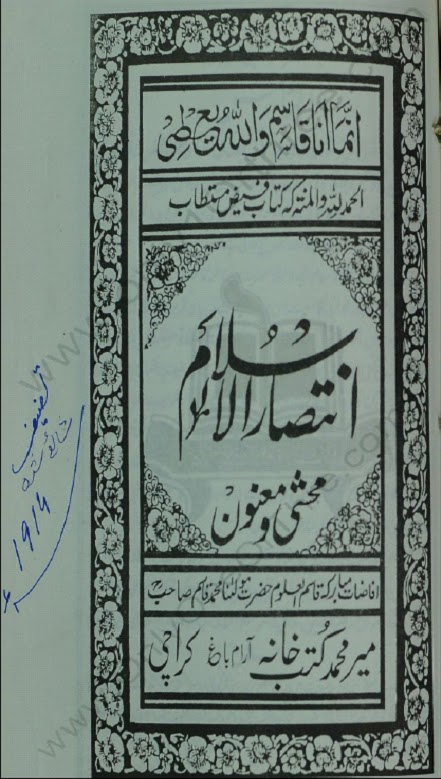
Deobandi Qasim Nanawti Explaining Meaning of Khaatam


Founder of Darul Ulum Deoband, Mawlana Qasim
 
Nanawtawi explained the true meaning and reality
 
of the word Khaatam as having an alternate
 
meaning apart from chronological finality:
 

سو جس میں اس صفت کا زیادہ ظہور ہو جو خاتم الصفات ہو یعنی اس سے اوپر اور صفت
 
 
 ممکن اظہور یعنی لایق انتقال وعطائے مخلوکات نہ ہو۔ وہ شخص مخلوکات میں خاتم
 
 
 المراتب ہوگا اور وہی شخص سب کا سردار اور سب سے افضل ہوگا۔


Translation: "Therefore, the person who possesses
 
this attribute, which is Khaatam as-Siffaat (Seal of
 
Attributes), to a greater degree of manifestation,
 
that is, there is no attribute above it or which has the
 
possibility of being manifested and granted into the
 
creation – such a person, among the creation, is the
 
Khaatam al-Maraatib (Seal of Stations), and that
 
person is the master of all and the most superior of
 
all."

Reference: Intisar-ul-Islam; p.48


Saturday, September 26, 2015

Deobandi Says: Whoever becomes Prophet is Still Beneath the Station of Khaatam an Nabuwwah


The founder of Darul Ulum Deoband, namely, Mulla Muhammad Qasim Nanautawi (d.1880), wrote concerning the status of Khaatam-an-Nabiyyeen (Seal of the Prophets) and the appearance of Prophets who are in subordination to it:

ایسے ہی خاتم مراتب نبوت کے اوپر اور کوئی عہدہ یا مرتبہ ہوتا ہی نہیں جو ہوتا ہے اسکے ماتحت ہوتا ہے

Translation: “There is no status above that of the Khaatam (Seal) of the stations of Prophethood. Whoever becomes (a Prophet) is subordinate to it.”

Reference: Mubahisah Shahjahanpur; p.25


Deobandi Blasphemy of Wahdat ul Wujud


The Deobandi mulla Rashid Ahmad Gangohi wrote the following letter which illustrates very chillingly his concept of Wahdat al-Wujud (the unity of all existence):

پس زیادہ عرض کرنا گستاخی اور شوخ چشمی ہے۔ یا اللہ معاف فرمانا کہ حضرت کے ارشاد سے تحریر ہوا ہے۔ جھوٹا ہوں کچھ نہیں ہوں تیرا ہی ظل ہے، تیرا ہی وجود ہے میں کیا ہوں کچھ نہیں ہوں۔ اور وہ جو میں ہے وہ تُو ہےاور میں اور تو خود شرک در شرک ہے۔

Translation: “Therefore, for me to say anything more would be an insult and personal indulgence. O Allah! Forgive me for having copied down the saying of Hadhrat [Imdadullah Muhajir Makki]. I am a liar, I am nothing. I am Your shadow, I am Your appearance. What am I? I am nothing. And whatever I am You are. And to say 'me and You' is itself nothing but Shirk upon Shirk!”

Reference: Makateeb-e-Rashidiyah; p.36


Deobandi Allegation Against the Prophet (A.S): Looking at the Private Parts of Animals While Praying


The Deobandi debater, Amin Safdar Okarvi, fabricated the worst kind of lie against our beloved Prophet Muhammad (Sallallahu alaihi wa Aalihi wasallam). Amin Okarvi wrote:

لیکن آپ ص نماز پڑھا تے رہے اور کتیا سامنے کھیلتی رہی، اور ساتھ گدھی بھی تھی، دونوں کی شرم گاہوں پر بھی نظر پڑتی رہی۔

Translation: “But he (Prophet – peace be upon him) continued to pray while a female dog was playing in front of him, and there was also a female donkey, and both of their private parts were being displayed (before him).”

Reference: Ghair Muqallideen Ki Ghair Mustanad Namaz; p.38

*Note: There exists no such Hadith which describes what has just been quoted from the arch-liar Amin Okarvi!


Deobandi Shirk: The Aarif Becomes God Inwardly معاذ الله


The spiritual mentor of the Deobandis, Hajji Imdadullah Muhajir Makki (1817-1899) said concerning the 'Aarif (one who is cognizant):

ظاہر میں بندہ اور باطن میں خدا ہوجاتا ہے

Translation: “He is a slave outwardly, but he becomes God inwardly.”

Reference: Kulliyat-e-Imdadiyah; p.36


Deobandi Fatwa Allowing Shirk: Calling upon Abdul Qadir Jilani for Assistance


Ashraf Ali Thanwi (1863-1943), the so called “Hakim-ul-Ummat” of the Deobandi sect, was asked the following question:

کلمہ یا شیخ عبد القادر جیلانی شیئًا للہ کے متعلق جناب کی رائے مبارک کیا ہے، قرآن کریم کی صدہا آیات ظاہری طور پر تو اس کے مخالف نظر آتی ہیں

Translation: What is your blessed opinion regarding the words “O Shaikh Abdul Qadir Jilani, give me something for the sake of Allah”? It seems that such words literally contravene the plain verses of the Qur'an.

In reply, to this question regarding making an utterance of undeniable Shirk, Mr. Ashraf Thanwi gave the following Fatwa:

الجواب۔ ایسے امور ومعاملات میں تفصیل یہ ہے کہ صحیح العقیدہ سلیم الفہم کے لئے جواز کی گنجائش ہوسکتی ہے

The Answer: “The detail of this affair is that there is a possibility of permission (to say these words) for the one who has a correct belief and a sound understanding.

Reference: Imdad-ul-Fatawa; v.5 p.357


Hanafi/Sufi Scholar Qadi Thanaullah Panipati: Siddiqeen are Reflection of the Prophets


The Hanafi, Sufi, Naqshbandi scholar, Qadi Thanaullah Panipati (d.1225 H) explained that the Siddiqeen (extremely truthful people) possess the Kamalat-e-Nabuwwat (perfections of Prophethood) by way of Zill (reflection). Quoting the verse of the Qur'an regarding the Virgin Mary:

وَ اِذۡ قَالَتِ الۡمَلٰٓئِکَۃُ یٰمَرۡیَمُ اِنَّ اللّٰہَ اصۡطَفٰکِ وَ طَہَّرَکِ وَ اصۡطَفٰکِ عَلٰی نِسَآءِ الۡعٰلَمِیۡنَ

And when the Angels said to her: “O Mary! Indeed, Allah has chosen you and purified you, and has chosen you above all the women of the worlds.” (3:42)

Qadi Thanaullah Panipati commented on this verse in his classic Tafsir Mazhari:

صوفیہ نے تجلیات ذاتیہ کی تعبیر کمالت نبوّت سے کی ہے جو انبیاء کو باذات بلاواسطہ حاصل ہوتے ہیں اور ذیلی طور پر انبیاء کی وساطت سے صدیقین کو ملتے ہیں۔ حضرت مریم صدیقہ تھیں اللہ نے فرمایا ہے وَ اُمُّہٗ صِدِّیۡقَۃٌ

اس لئے آپ کو کمالت نبوّت حاصل تھے

Translation: The Sufis have interpreted the personal divine manifestations as being the Kamalat-e-Nabuwwat (perfections of Prophethood), which are directly attained to by the Prophets, and attained to by the Siddiqeen through the intermediary of the Prophets by way of reflection. Mary was a Siddiqah as per the saying of Allah “And his mother was a truthful woman” (5:75) because she had within her the Kamalat-e-Nabuwwat (perfections of Prophethood).

Reference: Tafsir Mazhari; v.2 p.160


Deobandis and Concept of Zilli Nabuwwat (Shadow Prophethood)


The Deobandi scholar and historian, Mawlana Sayyid Muhammad Mian, wrote that the Mujaddid (reformer) is the shadow and resemblance of a Prophet:

فرق اگر ہے تو یہ ہے کہ نبوت اصل ہے اور تجدید اس کا ظل ہے۔وہاں الہام قطعی ہے جس کو وحی کہتے ہیں، یہاں ظنی ہے۔ اس کا منکر خارج از اسلام ہے، اس کا منکر خارج از اصلاح وتقوی ہے۔ بہر صورت مجددیت، نبوت کا ایک نہایت روشن اور درخشاں پر تو ہے۔ اس لئے مجدد علم وعمل کے لحاظ سے نبی کا سایہ اور اخلاق و ملکات کے لحاظ سےنبی کا نمونہ ہوتا ہے۔

Translation: If there is a difference, then it is this that Nabuwwah (Prophethood) is the original, and Tajdid (status of being a reformer) is its shadow. In Prophethood, Ilham (inspiration) is definite and is referred to as Wahi (revelation), while in Tajdid it (Ilham) is not definite. The rejecter of Prophethood is excluded from Islam, while the rejecter of a Mujaddid (Reformer) is excluded from rectification and righteousness. However, Mujaddidiyat is an extreme manifestation of the Light and Brilliance of Prophethood. This is because, in terms of knowledge and deeds, the Mujaddid is the shadow of the Prophet, and in terms of character and morals, he is a sample of the Prophet.

Reference: Ulama-e-Hind Ka Shandar Mazi; p.144


Deobandi Quoting "Hadith" That Shuyukh and Ulama are Like Prophets


The major Deobandi scholar, Mulla Rashid Ahmad Gangohi (1829-1905), cited the following alleged “Ahadith” of the Prophet (Sallallahu alaihi wasallam) which are related to the subject of Khatam-an-Nabuwwah (Finality of Prophethood):

کیونکہ جناب رسول اللہ صلی اللہ تعالے علیہ وسلم کا ارشاد ہے کہ ”شیخ اپنے مریدوں میں ایسا ہے جیسے نبی اپنی امت میں“ اس کے علاوہ آپ ص نے اپنی امت کے علماء کو بنی اسرائیل کے انبیاء کے مثل فرمایا ہے

Translation: Because the Messenger of Allah (Sallallahu alaihi wasallam) has said: “The Shaikh among his disciples is like a Prophet among his Ummah” and apart from this he (Sallallahu alaihi wasallam) said that the Ulama (scholars) of his Ummah are like the Prophets of the children of Israel.

Reference: Imdad-us-Suluk; p.65


Deoband Founder Qasim Nanautawi Calling Upon the Dead to Pray for Him


The founder of the Deobandi sect, Mawlana Muhammad Qasim of Nanawta (d.1880) used to visit the Mazaars (shrines built over the graves – something itself that is forbidden according to the teachings of Islam), and would ask the dead inmate of the grave to pray for him!

اگر اکیلے کسی مزار پر جاتے اور دوسرا شخص وہاں موجود نہ ہوتا، تو آواز سے عرض کرتے کہ آپ میرے واسطے دعا کریں۔

Translation: If he (Qasim Nanautawi) went to a Mazar alone, and there was no one else present there, he would vocally say [to the inmate of the grave]: “Please pray for me.”

Reference: Sawaneh Qasimi; v.2 p.29


Deobandi Belief: An Ummati Can Surpass a Prophet in Deeds! معاذ الله


The founder of the Deobandi school of thought – Muhammad Qasim Nanautawi (1833-1880) claimed that an Ummati can surpass even a Prophet in good deeds:

دلیل اس دعوے کی یہ ہے کہ انبیاء اپنی امت سے اگر ممتاز ہوتے ہیں تو علوم ہی میں ممتاز ہوتے ہیں۔ باقی رہا عمل، اس میں بسا اوقات بظاہر امتی مساوی ہوجاتے ہیں بلکہ بڑھ جاتے ہیں

Translation: “The evidence for this claim is that the Prophets, if they excell their Ummah (nation), then it is in the field of knowledge that they excell. As for good deeds, then sometimes an Ummati, at face value, exceeds (a Prophet).”

Reference: Tahzeer-un-Nas; p.47


Deobandi Belief: Punishment of Grave Does not Occur in the Grave!

The Deobandi mulla “Hakim ul-Ummat” Ashraf Ali Thanwi (1863-1943) explained his belief that the Adhab al-Qabr (punishment of the grave) does not actually occur in the “ditch” that is dug which we call grave, but punishment of the grave refers to a parallel world. He wrote:

بس اس عالم مثال ہی کا نام قبر ہے، اب سب اشکال رفع ہوگئے، کیا معنی کہ قبر سے مراد یہ محسوس گڑھا نہیں ہے کیوںکہ کسی کو بھیڑیا کھا گیا، کوئی سمندر میں غرق ہوگیا، تو اس صورت میں چونکہ وہ زمین میں دفن نہیں ہوا اس لیے اس کو چاہیے کہ قبر کا عذاب ہی نہ ہو، لیکن اب اشکال ہی نہ رہا، کیوں کہ وہ عالم مثال ہے، وہیں اس کو عذاب قبر بھی ہوجائے گا، اشکال تو جب ہوتا جب قبر سے مراد یہ گڑھا ہوتا جس میں لاش دفن کی جاتی ہے، حلانکہ اصطلح شریعت میں قبر گڑھے کو کہتے ہی نہیں، بلکہ عالم مثال کو کہتے ہیں
Translation: Therefore, this Alam-e-Misaal (Parallel World) is named as Grave. Now the confusion is removed, because by grave is not meant this earthly ditch. A person may be eaten by a wolf or drown in the sea, so that his corpse is not buried in the Earth. Therefore, he should not receive any punishment in the grave. But now the confusion does not remain, because it is the parallel world where he will receive the punishment of the grave. There can only be confusion if by “grave” is meant this ditch in which the corpse is buried, whereas in the terminology of the Shari'ah this ditch is not even considered as the grave, but only the parallel world is!
Reference: Ashraf-ul-Jawab; p.600-601


Friday, September 18, 2015

Sufi Ali Hujweri: The Prophet (A.S) met only the Spirit of Jesus During Mi'raj

The Sufi “saint” Ali b. Usman al-Hujweri, falsely worshiped as “Data Ganj Baksh”, publicised his belief that on the night of the Mi'raj (spiritual ascension), the Prophet Muhammad (Sallallahu alaihi wasallam) met with the Spirits of Prophets Adam, Yusuf, Musa, Harun, Eesa and Ibrahim. This proves that Eesa, like the other prophets, has died, and it is only his Spirit that the Prophet (alaihis salam) met during the Mi'raj like the spirits of the other Prophets, whose physical bodies have been buried in the graves:

نبی کریم علیہ التحیۃ والتسلیم فرماتے ہیں کہ شب معراج میں نے حضرت آدم صفی اللہ، یوسف صدیق، موسی کلیم اللہ، ہارون حلیم اللہ، عیسی روح اللہ اور حضرت ابراہیم خلیل اللہ علیہم السلام کو آسمانون پر دیکھا۔ بلا شبہ وہ ان کی ارواح ِ مقدسہ تھیں۔


Translation: The Prophet (alaihi at-tahhiyat wat-tasleem) says: “On the Night of Mi'raj I saw Adam, Joseph, Moses, Aaron, Jesus, and Abraham – peace be upon them – in the Heavens. Without a doubt it was their holy souls.”


Reference: Kashf-ul-Mahjub; p.415-416


Imam Muhammad b. Abdul Wahhab (R.A) and Death of Jesus (A.S)


Imam Muhammad bin Abdul Wahhab al-Najdi (rahimahullah) showed his preference for the belief that the Messiah of Nazareth (alaihis salam) has died. In his monumental biography of the Prophet Muhammad (Sallallahu alaihi wasallam), Imam ibn Abdul Wahhab recounted the episode of Jarud's (R.A) debate with the apostates of Bahrain after the death of the Prophet (alaihis salam):


وفي لفظ أنه قال: ما شهادتكم على موسى؟ قالوا: نشهد أنه رسول الله. قال: فما شهادتكم على عيسى؟ قالوا: نشهد أنه رسول الله. قال: وأنا أشهد أن لا إله إلا الله, وأن محمداً عبده ورسوله. عاش كما عاشوا , ومات كما ماتوا


Translation: From Jarud (R.A) in these words: “What is your testimony concerning Moses?” They said: “We bear witness that he is the Messenger of Allah.” He (Jarud) said: “And what is your testimony concerning Jesus?” They said: “We bear witness that he is the Messenger of Allah.” He (Jarud) said: “And I bear witness that there is none worthy of worship except Allah, and Muhammad is His servant and Messenger. He lived as they all lived, and he died as they all died.”


Reference: Mukhtasar Sirat al-Rasul; p.293


Egyptian Islamic Scholar Muhammad Abduh: Jesus (A.S) has Died

 The Egyptian Islamic reformer and scholar of the Salafi movement, Muhammad Abduh (1849-1905), commented on the following Ayah of the Holy Qur'an:


۞اِذۡ قَالَ اللّٰہُ یٰعِیۡسٰۤی اِنِّیۡ مُتَوَفِّیۡکَ وَ رَافِعُکَ اِلَیَّ وَ مُطَہِّرُکَ مِنَ الَّذِیۡنَ کَفَرُوۡا

When Allah said: “O Jesus! I shall take you [by death] and raise you up to Me [by spirit] and purify you from those who disbelieve...” (3:55)


Muhammad Abduh gave the meaning of this verse as follows:

إنى مميتك وجاعلك بعد الموت فى مكان رفيع عندى


Translation: “I shall cause you to die and take you, after your death, to an exalted station in My sight.”

Reference: Tafsir al-Manar; v.3 p.316


Shaikh of Al-Azhar Mustafa al-Maraghi: Jesus (A.S) Died


The Egyptian Islamic scholar, reformer and rector of Al-Azhar University, Shaikh Ahmad Mustafa al-Maraghi (1881-1945) confirmed in his monumental Tafsir that the Prophet Jesus (peace be upon him) has died.


Commenting on the verse of the Qur'an (3:144), Al-Maraghi wrote:


أى إن محمدا ليس إلا بشر قد مضت الرسل قبله فماتوا وقتل بعضهم كزكريا ويحيا, ولم يكتب لأحد منهم الخلد. أفإن مات كما مات موسى وعيسى وغيرهما من النبيين


Translation: “That is – verily Muhammad (peace be upon him) is not except a mortal man. The Messenger in the past before him, they all died, or some of them were killed like Zechariah and Yahia, and eternity was not decreed for a single one of them. If he (Prophet Muhammad) dies like Moses and Jesus died, and other Prophets died...”

Reference: Tafsir al-Maraghi; v.4 p.87


Amin Ahsan Islahi: All Messengers of Allah have died

The Islamist thinker and ex-member of the Jama'at-e-Islami, Amin Ahsan Islahi (1904-1997), commenting on the Ayah of the Qur'an:

وَ مَا مُحَمَّدٌ اِلَّا رَسُوۡلٌ ۚ قَدۡ خَلَتۡ مِنۡ قَبۡلِہِ الرُّسُلُ ؕ اَفَا۠ئِنۡ مَّاتَ اَوۡ قُتِلَ انۡقَلَبۡتُمۡ عَلٰۤی اَعۡقَابِکُمۡ ؕ وَ مَنۡ یَّنۡقَلِبۡ عَلٰی عَقِبَیۡہِ فَلَنۡ یَّضُرَّ اللّٰہَ شَیۡئًا ؕ وَ سَیَجۡزِی اللّٰہُ الشّٰکِرِیۡنَ۞

And Muhammad (صلى الله عليه وسلم) is not but a Messenger. All the Messengers before him passed away. If he (too) dies or is slain will you turn back upon your heels? And he who turns upon his heels cannot harm Allah in the least. And Allah shall reward the grateful (3:144)

With respect to this verse of the Qur'an al-Karim, Amin Ahsan Islahi confirmed that every single Messenger (Rasul) before Prophet Muhammad (peace be upon him) has already died:

جس طرح تمام رسولوں کو موت کے مرحلہ سے گزرنا پڑا انہیں بھی ایک دن وفات پانا ہے۔

Translation: “Just like all of the Messengers went through the gate of death, he (the Prophet Muhammad peace be upon him) must also die one day.”

 
Reference: Tadabbur-e-Qur'an; v.2 p.185

Thursday, September 17, 2015

Imam Ibn Hazm (R.A) and the Death of Jesus عليه السلام

The great Islamic scholar and jurist, Imam Ibn Hazm al-Andalusi (d.456 H) understood the fact that the Qur'an al-Majid declares that the Messiah Eesaa ben Mariam (alaihis salam) has died. He wrote:

ولم يرد عيسى عليه السلام بقوله (فلما توفيتنى) وفاة النوم فصح أنه انما عنى وفاة الموت

Translation: “And Jesus (peace be upon him) did not mean by his saying Falammaa Tawaffaytanee (5:117) that he was made to sleep. What is correct is that he was made to Die.”

Reference: Al-Muhalla; v.1 p.23 (Mas'alah no.41)


Wednesday, September 16, 2015

Ibnul Wardi: A Section of Muslims Believe Descent of Jesus (A.S) Means Someone Who Resembles Him

According to the Islamic scholar and historian Sirajuddin Abu Hafs Umar ibnul Wardi (d. 749 H), there is a section of Muslims who believe that the descent of the Messiah in the latter days is not literal, but will be fulfilled by the coming of a man who shall bear the characteristics of the Messiah and resemble him spiritually:

وقالت فرقة: نزول عيسى خروج رجل يشبه عيسى في الفضل والشرف كما يقال للرجل الخير ملك وللشرير شيطان, تشبيهاً بهما, ولا يراد الأعيان

Translation: A section (of the Muslims) say: “The descent of Jesus signifies the fact that a man will appear who will resemble Jesus in virtue and excellence. This is like how it is said about a good man that he is an Angel, or about an evil man that he is a Satan, by way of resemblance, but not intending it literally.”

Reference: Khareedat-ul-Aja'ib wal Fareedat-ul-Ghara'ib, p.190


Monday, September 14, 2015

Imam Malik (R.A) and the Death of Masih (Alaihis salam)

According to the following references, Imam Malik b. Anas (rahimahullah) – indeed a major Imam and scholar of the early Muslim community – believed that the Messiah Ibn Maryam (alaihis salam) passed away (died).

Reference: Majma Bihar ul Anwar; v.1 p.286; Ikmal-i-Ikmal (Sharh Sahih Muslim); v.1 p.265


Shah Waliullah and Following the Four Schools

  بِسۡمِ اللّٰہِ الرَّحۡمٰنِ الرَّحِیۡمِ In the Name of Allah, the Rahman, the Merciful يا نبي سلام عليك Shah Waliullah of Delhi (1703-1762)...