Wednesday, May 13, 2015

Hanafi Disrespect of the Quran: Stepping and Sitting on Copies of Quran Allowed! معاذ الله

In numerous entries, I have demonstrated how low an opinion the Hanafis have of the Book of Allah, the Qur'an Majid. The only explanation I can think of is that the Qur'an must be hated by the Hanafis since it goes against their manmade jurisprudence “Made in Kufa Fiqh”.

Now witness for yourself some of the rulings of the Hanafi jurisprudence about how to treat copies of the Qur'an. The Hanafis say that to sit on top of copies of the Qur'an or to step on it with one's foot, using it as a support to reach a high place, is allowed:

وَإِذَا حُمِلَ المُصْحَفُ أَوْ شَيْءٌ مِنْ كُتُبِ الشَّرِيعَةِ عَلَى دَابَّةٍ فِي جَوَالِقَ وَرَكِبَ صَاحِبُ الْجَوَالِقِ عَلَى الْجَوَالِقِ لَا يُكْرَهُ

قرآن مجید یا دیگر اسلامی کتابوں کو بوریوں میں بھر کر جانور پر لادا اور بوریوں کے اوپر سوار ہوگیا تو یہ جائز ہے

Translation: It is permissible for someone to put a copy of the Qur'an or any religious books in a bag then load them onto a riding beast, and sit over the bag while riding.

رجل وضع رجله على المصحف ان كان على وجه الاستخفاف يكفر والا فلا

آدمی نے اپنا پا‏ؤں قرآن مجید کے اوپر رکھا۔ اگر بے ادبی کی نیت سے ہو تو کافر ہے ورنہ نہیں

Translation: If a man put his foot on the Qur'an Majid, intending disrespect, then it is an act of Kufr, otherwise it is not.

Reference: Fatawa Alamgiri; vol. 5, p. 322

Hanafi Fiqh: Temporary Marriage Permitted. Hanafi Scheme to Commit Zina

In the previous entry, a fatwa from the Barelwi sect, from no less a figure than Ahmad Reza Khan himself, allowed for different kinds of temporary marriage.
But now we shall see that the Barelwis have only inherited this ruling from the Hanafi school which they blindly follow.

The official Hanafi ruling is as follows:

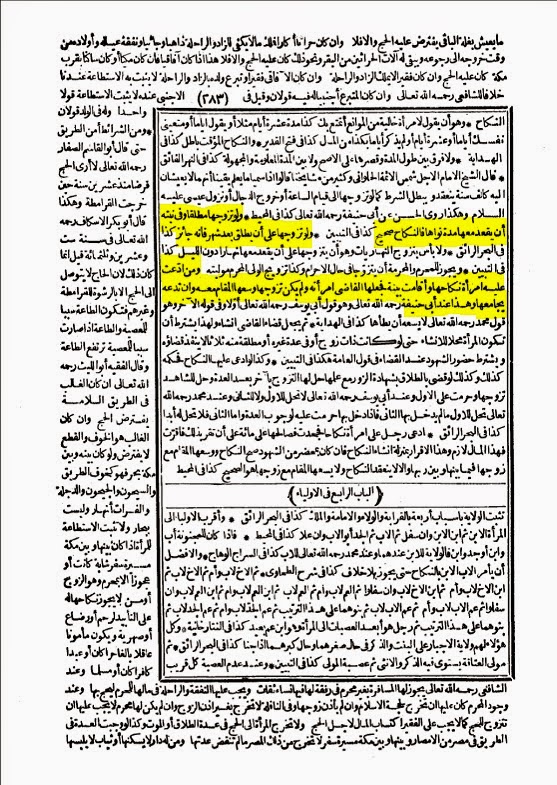
وَلَوْ تَزَوُّجُهَا مُطْلَقًا، وَفِي نِيَّتِهِ أَنْ يُقْعِدَ مَعَهَا مُدَّةَ نَوَاهَا فَالنِّكَاحُ صَحِيحٌ

عورت سے مطلق نکاح کیا دل میں یہ نیت ہے کہ وہ اس کے ساتھ صرف ایک مخصوص مدت بسر کرے گا تو نکاح صحیح ہے

Translation: If he married her, but it was his intention to be with her for only a particular period, even so the Nikah is correct.

وَلَوْ تَزَوُّجُهَا عَلَى يُطْلِقُ بَعْدَ الشَّهْرِ فَأَنَّهُ جَائِزٌ

اگر عورت سے نکاح کیا اس شرط پر کہ وہ ایک مہینہ بعد طلاق دے دے گا تو یہ جائز ہے

Translation: If he married her upon the condition of divorce after a month, then this is permissible.

Next, we have, on the same page as the above mentioned quotes, a scheme devised by the Hanafi jurists whereby an unmarried couple may commit Zina:

وَمن ادَّعَت عَلَيْهِ امْرَأَة أَنه تزَوجهَا وأقامت بَيِّنَة فَجَعلهَا القَاضِي امْرَأَته وَلم يكن تزَوجهَا وسعهَا الْمقَام مَعَه وَأَن تَدعه يُجَامِعهَا

عورت نے مرد پر نکاح کا دعوی کردیا اور دلیل بھی قائم کر دی اور قاضی نے عورت کے حق میں فیصلہ دے دیا حالنکہ حقیقت میں نکاح نہیں ہوا تھا تو مرد کا اس سے ہمبستر ہونا جائز ہے

Translation: A woman claimed that she is married to a man, and presented evidence before a judge who ruled in her favor, even though in reality they are not married. In such a case, it is allowed for the man to have sexual relations with the woman.

Reference: Fatawa Alamgiri; vol. 1, p. 283

Barelwis Permit Temporary Marriage (Fatwa of Ahmad Reza Khan Barelwi)

It is generally well known that the Shi'a are a sect which are unique in allowing for a form of marriage known as Mut'ah (temporary marriage for pleasure). The rest of the world denounces this concept as thinly veiled prostitution. There is even a famous documentary Prostitution: Behind the Veil released in 2004 that explores the reality of Mut'ah/Sighe marriages in Iran (a predominantly Shi'a country).

However, do not think that the Shi'a are alone in allowing for such an absurd idea as temporary marriage. Another equally if not greater misguided sect, the Barelwis, also permit the concept of temporary marriage. In the book Fatawa Africa of “Ala Hazrat” Ahmad Reza Khan Barelwi, the following fatwa is present:

اور اگر نکاح بے قید مدت کیا اور دل میں یہ ہے کہ اتنے دنوں کیلیۓ کرتا ہوں پھر چھوڑ دوں گا یا عقد نکاح میں ایک مدت کے بعد طلاق دینے کی شرط لگا‏ئی مثلࣰتجھ سے نکاح کیا اس شرط پر کہ اتنے دنوں بعد طلاق دیدوں گا یا پہلے باہم گفتگو ہو‏ئی تھی کہ اتنے دنوں کے لئے نکاح کر لیں پھر نکاح مطلق بلا قید کیا تو ان سب صورتوں میں وہ نکاح صحیح ہوا

Translation: “If someone married without any restrictions on the duration of the marriage, but in his heart he intended to marry for a certain number of days and then separate, or if it was stipulated in the marriage contract that after a certain period divorce would occur, for example, 'I marry you with this condition that after a certain number of days I will divorce you', or if before the marriage it was verbally agreed that the marriage would last for only a certain fixed period...then still the marriage was done completely without any time restrictions, then in all of these scenarios the marriage is correct.”

Reference: Fatawa Africa, p. 52


Hanafi Disrespect to the Qur'an: Fatwa Allowing Writing of Fatiha with Blood and Urine! معاذ الله

In one of my previous posts, I cited a reference from Deobandi Mufti Taqi Usmani about writing Surah al-Fatiha (the first chapter of the Qur'an) with blood and urine.
However, make no mistake, this is not simply a Deobandi quote, it is in fact originally a well known Mas'alah of the Hanafi school of thought. We seek refuge in Allah from such a blasphemy and disrespect to the Qur'an. Only the extremely misguided and astray Hanafis could allow for writing the Qur'an with impurities like blood or urine:

لَوْ رَعَفَ فَكَتَبَ الْفَاتِحَةَ بِالدَّمِ عَلَى جَبْهَتِهِ وَأَنْفِهِ جَازَ لِلِاسْتِشْفَاءِ، وَبِالْبَوْلِ أَيْضًا إنْ عَلِمَ فِيهِ شِفَاءً لَا بَأْسَ بِهِ

Translation: It is permissible to write the Fatiha with blood upon his forehead and his nose upon realizing it will result in cure to do so, and with urine also for the purpose of cure. There is no problem in it.

وَقَدْ عُلِمَ أَنَّهُ لَوْ كَتَبَ فَاتِحَةَ الْكِتَابِ أَوْ الْإِخْلَاصَ بِذَلِكَ الدَّمِ عَلَى جَبْهَتِهِ يَنْقَطِعُ فَلَا يُرَخَّصُ لَهُ فِيهِ؛ وَقِيلَ يُرَخَّصُ كَمَا رُخِّصَ فِي شُرْبِ الْخَمْرِ لِلْعَطْشَانِ وَأَكْلِ الْمَيْتَةِ فِي الْمَخْمَصَةِ وَهُوَ الْفَتْوَى.

Translation: And if he comes to know that writing Surah al-Fatiha of the Qur'an or Surah al-Ikhlas with blood upon the forehead, then there is no dispensation for this. But it is said there is a dispensation for it like the dispensation for drinking wine in a state of extreme thirst or eating carrion in a state of starvation, and upon this is the Fatwa.

Reference: Radd ul Muhtar; vol. 1, p. 365-366


Deobandism Exposed: Funny Story of Ashraf Thanwi's Mamoo (Maternal Uncle)

The Deobandi sect is full of all kinds of filthy and harmful Aqa'id (beliefs) and ideas which have nothing to do with the pure and pristine teachings that spring from the holy fountain of Qur'an and Sunnah.

Take for example Ashraf Ali Thanwi (1863-1943), who narrates an incident from his mamoo (maternal uncle), also considered a respected “elder” and saintly figure by the Deobandis. Ashraf Thanwi narrates:

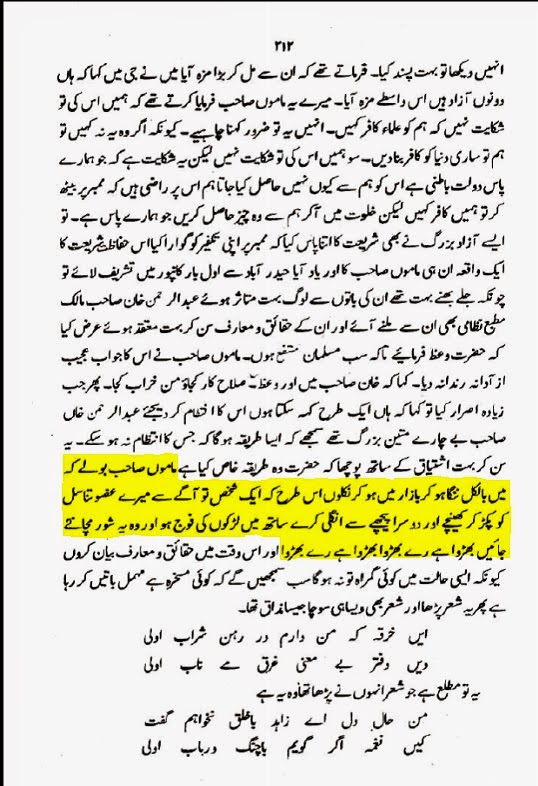
ماموں صحب بولے کہ میں بلکل ننگا ہو کر بازار میں ہو کر نکلوں اس طرح کہ ایک شخص تو آگے سے میرے عضو تناسل کو پکڑ کر کھینچے اور دوسرا پیچھے سے انگلی کرے ساتھ میں لڑکوں کی فوج ہو اور وہ یہ شور مچاۓ جائیں بھڑوا ہے رے بھڑوا بھڑوا ہے رے بھڑوا اور اس وقت میں حقائق و معارف بیان کروں

Translation: ‏‏My maternal uncle said that “I should get completely naked and go out to the market, where someone should drag me by my penis from the front, and another should finger my anus from behind, and alongside there should be an army of boys shouting 'pimp, pimp, pimp, pimp!' and in that condition I should preach the gnostic realities.”

**Comment: Look how dirty and perverted these Deobandis and their so called “elders” really are. How can anyone follow such disgusting and perverted so called “Ulama” and “Sufiya”?

Reference: Malfoozaat Hakeem ul Ummat; vol. 9, p. 212


Tuesday, May 12, 2015

Deobandi Shirk: Imdadullah Muhajir Makki's Supplication to the Prophet (AS)

The leader of the Deobandi sect, Imdadullah Muhajir Makki (1817-1899), the spiritual mentor of Ashraf Thanwi, Rashid Gongohi, and other major Deobandi figures, was no doubt guilty of the most vile and disgusting shirk. Yes, the kind of shirk which nullifies a person's Islam!
See for yourself one of his poetic supplications to the Prophet (alaihis salam). Note that according to Islam, we pray and offer supplication only to Allah (God), and not to anyone else!

Imdadullah Muhajir Makki said:

یا رسول کبریا فریاد ہے یا محمد مصطفے فریاد ہے
 
O majestic Rasul, I beseech you. O Muhammad Mustafa, I beseech you!

آپ کی امداد ہو میرا یا نبی حال ابتر ہوا فریاد ہے

Your help is needed, O my Prophet. Considering my condition, I beseech you!

  سخت مشکل میں پھنسا ہوں آجکل
 
I am in extreme distress these days...

ایے میرے مشکل کشا فریاد ہے
 
O my Remover of Difficulties, I beseech you!
 
تم سے ایے نور خدا فریاد ہے

To you, O Light of God, I cry out for help.

Reference: Kulliyat-e-Imdadiya, p. 90-91


Hanafi Fatwa: Tarteeb is not Necessary for Completion of Wudu

The Hanafis confess that according to their bizarre and un-Islamic “jurisprudence”, Tarteeb (performing the actions in sequence) is merely Sunnah and not Fard (obligatory). This means, a person who does Wudu against the proper sequence, for example, washing his feet first rather than last, or wiping the head before washing the face, etc., such a person's actions will complete his Wudu:

وَالتَّرْتِيبُ فِي الوُضُوءِ سَنَةٌ عِنْدَنَا، وَعِنْدَ الشافعي - رَحِمَهُ الله - فَرْضٌ

Translation: And Tarteeb (Sequence) in Wudoo is only Sunnah according to us, but according to Imam Shafi'ie (rahimahullah) it is Fard (obligatory).
Reference: Hidayah, vol. 1, p. 105 (Kitab ut Taharah)


Hanafi Fatwa: To Get Drunk At Night Does not Invalidate I'tikaaf

According to the Hanafi school of thought, if a person is in I'tikaaf (spiritual seclusion) – which is a type of worship in Islam – and he gets drunk at night, his I'tikaaf is not broken:

وَإِذَا سَكَّرَ المعتكف لَيْلًا لَمْ يُفْسِدْ اِعْتِكَافُهُ؛ لِأَنَّهُ تَنَاوُلٌ مَحْظُورُ الدِّينِ لَا مَحْظُورٌ الاِعْتِكَافُ

معتکف رات کو نشہ کرلے تو اس کا اعتکاف فاسد نہیں ہوگا۔ اس لیے کہ اس نے ایسی شے استعمال کی ہے جو دین کےخلاف ہے نہ کہ اعتکاف کے خلاف۔

Translation: And if the Mu'takif intoxicates at night, his I'tikaaf is not nullified, because intoxication is against the Religion, and not necessarily against I'tikaaf.
Reference: Fatawa Alamgiri; vol. 1, p. 213


Hanafi Fatwa: To Walk in Cemetery Wearing Shoes is not Disliked

The Prophet Muhammad (Sallallahu alaihi wasallam), according to an authentic Hadith, forbade people from walking in the cemetery with shoes:

وَحَانَتْ مِنْ رَسُولِ اللَّهِ صلى الله عليه وسلم نَظْرَةٌ فَإِذَا رَجُلٌ يَمْشِي فِي الْقُبُورِ عَلَيْهِ نَعْلاَنِ فَقَالَ ‏"‏ يَا صَاحِبَ السِّبْتِيَّتَيْنِ وَيْحَكَ أَلْقِ سِبْتِيَّتَيْكَ ‏"‏ ‏.‏ فَنَظَرَ الرَّجُلُ فَلَمَّا عَرَفَ رَسُولَ اللَّهِ صلى الله عليه وسلم خَلَعَهُمَا فَرَمَى بِهِمَا ‏.‏

Translation: The Messenger of Allah (ﷺ) suddenly saw a man walking in shoes between the graves. He said: O man, wearing the shoes! Woe to thee! Take off thy shoes. So the man looked (round), When he recognized the Messenger of Allah (ﷺ), he took them off and threw them away. (Sunan Abu Dawud; Kitab ul Jana'iz)

However, according to the insidious Hanafi jurisprudence, it is allowed to walk in the cemetery with shoes, and it is not even makruh (disliked) to do so:

وَالمَشْيُ فِي المَقَابِرِ بِنَعْلَيْنِ لَا يَكْرَهُ عِنْدَنَا

قبروں میں جوتوں سمیت چلنا ہمارے نزدیک معیوب نہیں۔

Translation: To walk in the cemetery wearing shoes is not disliked according to us
Source: Fatawa Alamgiri, vol. 1, p. 167

Abu Hanifah was a Murji (Verdict of Imam Bukhari)

The eminent Imam and Amir ul Mu'mineen fil-Hadith, Muhammad b. Isma'il al-Bukhari (radiyallahu anhu) said regarding Abu Hanifah:

كَانَ مُرجِئًا، سَكَتُوا عنه، وعَنْ رَأيِهِ، وعَنْ حديثه
 
Translation: He (Abu Hanifah) was a Murji, they were silent regarding him, and regarding his opinion and his Hadith.

Source: Tarikh al-Kabeer (Bukhari), No. 2253


Abu Hanifah Allows for Intoxicating Drinks!

All intoxicants and hard drinks are absolutely forbidden in Islam. The Qur'an has referred to Khamr (intoxicants) as the abomination of Satan (5:90).

The Prophet Muhammad (Sallallahu alaihi wasallam) has clarified for us that Khamr is not simply wine, but every intoxicating substance is named Khamr:

كُلُّ مُسْكِرٍ خَمْرٌ ، وَكُلُّ مُسْكِرٍ حَرَامٌ ، وَمَنْ شَرِبَ الْخَمْرَ فِي الدُّنْيَا ، فَمَاتَ 

وَهُوَ يُدْمِنُهَا لَمْ يَتُبْ لَمْ يَشْرَبْهَا فِي الْآخِرَةِ

Translation: “Every intoxicant is a Khamr, and every intoxicant is forbidden. Whoever drank Khamr in this world, then died without having repented, shall not drink it (a celestial drink) in the Hereafter.” (Sahih Muslim: Kitab ul Ashribah)

Furthermore, the Prophet (Sallallahu alaihi wasallam) stated:

كُلُّ مُسْكِرٍ حَرَامٌ وَمَا أَسْكَرَ كَثِيرُه ، فَقَلِيلُهُ حَرَامٌ

Translation: “Every intoxicant is forbidden, and that which intoxicated in large amounts is forbidden in small amounts also.” (Sunan Ibn Majah; Kitab ul Ashribah)

But now look at the verdict of the so called “Imam al-Azam”, Abu Hanifah, whom the Hanafis believe declared certain types of intoxicating drinks to be lawful:

أَنَّ مَا يُتَّخَذُ مِنْ الْحِنْطَةِ وَالشَّعِيرِ وَالْعَسَلِ وَالذُّرَةِ حَلَالٌ عِنْدَ أَبِي حَنِيفَةَ، وَلَا يُحَدُّ 

شَارِبُهُ عِنْدَهُ وَإِنْ سَكِرَ مِنْهُ  

Translation: (The hard drink) made from wheat, barley, honey, and corn is Halal (allowed) according to Abu Hanifah, and there is no Hadd (penalty) for drinking it according to him even if it intoxicates.

Source: Hidayah, Part 7, Page 293

Hanafi Fiqh: Milk of Donkeys is Pure!

In our previous post, we established that according to the Hanafi jurisprudence, it is permissible to slaughter and sell the meat of donkeys. Now in this entry is a reference from the main Hanafi manual of fiqh called “Hidayah” (which in a previous post was mentioned is regarded as similar to the Qur'an by the Hanafis). According to “Hidayah” the milk of donkeys is pure (which means it is drinkable according to the Hanafis!)

وَكَذَا لَبَنُهُ طَاهِرٌ

Translation: And its (donkey) milk is pure

Source: Hidayah, Part 1, Page 166


Hanafi Fiqh: Allowed to Slaughter and Sell Dog, Donkey Meat and Meat of Carnivorous Predators!

According to the book Fatawa Alamgiri, which is a basic manual of Hanafi fiqh rulings compiled under the authority of the Mughal emperor Aurangzaib, it is allowed to slaughter and sell the meat of dogs and donkeys! (despite the fact their consumption is forbidden in Islam):

إذَا ذَبَحَ كَلْبَهُ وَبَاعَ لَحْمَهُ جَازَ وَكَذَا إذَا ذَبَحَ حِمَارَهُ وَبَاعَ لَحْمَهُ

Translation: It is permissible to slaughter one's dog and sell its meat, and likewise, to slaughter one's donkey and sell its meat.

Furthermore, on the same page, the Hanafi fiqh allows for the slaughtering and selling of the meat of all predatory (wild) beasts (like lions, bears, cheetahs, crocodiles, etc.):

وَيَجُوزُ بَيْعُ لُحُومِ السِّبَاعِ وَالْحُمُرِ الْمَذْبُوحَةِ في الرِّوَايَةِ الصَّحِيحَةِ

Translation: And it is permissible to sell the meat of predatory/carnivorous animals, and slaughtered donkeys according to an authentic narration.

Source: Fatawa Alamgiri, Vol. 3, P. 115


Abu Hanifah's Fatwa: "No Problem Worshipping a Shoe in Obtaining Nearness to Allah"!!!


أَنَّ أَبَا حَنِيفَةَ قَالَ : لَوْ أَنَّ رَجُلًا عَبَدَ هَذِهِ النَّعْلَ يَتَقَرَّبُ بِهَا إِلَى اللَّهِ لَمْ أَرَ بِذَلِكَ بَأْسًا.

It is narrated that Abu Hanifah said: “If a man worshiped this shoe seeking nearness to Allah by it, then I see no problem with that.” And we seek refuge in Allah from such an obvious Shirk and Kufr, as pointed out by Sa'eed (one of the narrators).

  the editor(s) have described the narration as Isnaduhu Sahih (it has an authentic chain
Source: Tarikh Baghdad, vol. 15 p. 509


Shaikh Abdul Qadir Jilani Explains Vision of Allah in Form of a Youth!

The Sufi Shaikh, and originator of the Qadiriyah Silsilah, Abdul Qadir al-Jilani (Rahmatullah alaih), apparently affirmed the narrations of the Prophet Muhammad (Sallallaahu alaihi wasallam) having a vision of Allah in the form of a youth!

 
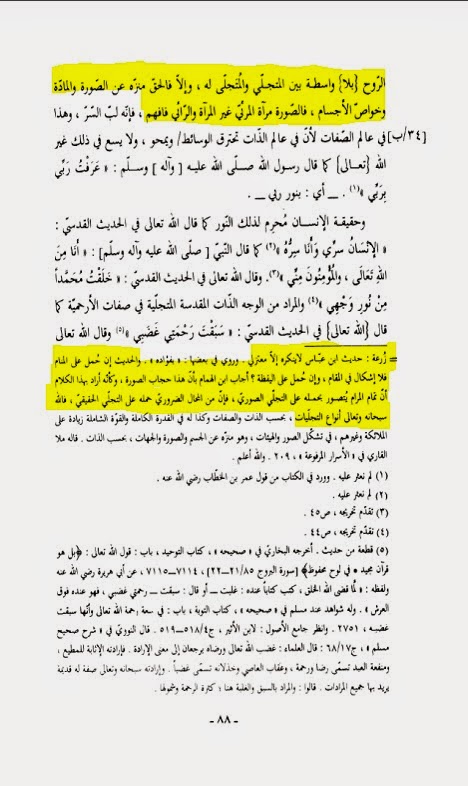
ولعل المراد من قول النبي صلى الله عليه واله وسلم :
(
رأيت ربي على صورة شاب أمرد ) هو طفل المعاني ويتجلى الرب في هذه الصورة في مرآة الروح بلا واسطة بين المتجلي و المتحلى له وإلا فالحق منزه عن الصورة والمادة وخواص الأجسام
“I saw my Lord in the form of a youth...perhaps the meaning of this saying of the Prophet (Sallallaahu alayhi wa ala aalihi wasallam) is that he saw Him in the form of a child, and that Allah manifested His glory
upon a mirror spirit. Otherwise, Allah is free from the particularities of form, matter, and body...”
Source: Sirr ul Asrar wal Mazhar ul Anwar, p. 87-88


Imam Ahmad b. Hanbal: Soul of Deceased Returns to Its Body in Grave

One of the errors of Imam Ahmad b. Hanbal was his belief that the spirit of the deceased returns to its body in the grave:
He said:
أَنَّهُ يَقْبِضُ الأَرْوَاحُ ثُمَّ تُرَدُّ في الأَجْسَادِ في القُبُورِ
(And we believe that) the Angel of Death takes the souls, then returns them to the bodies in the graves.
Source: Tabaqatul Hanabilah, vol. 2, p. 430


Stupid Shiite Belief: Prophet (AS) was Breastfed by Uncle Abu Talib!

Just to give the reader a (sour) taste of the kind of rubbish and fabricated tales that abound in the Shi'ite literature, I have reproduced below a quote from the most authentic Shi'ite book (Usul al-Kafi) where the belief of the Shi'ites is mentioned that the Prophet (alayhis salaam) was breastfed by his paternal uncle Abu Talib!
“Muhammad ibn Yahya has narrated from Sa‘d ibn ‘Abdallah from Ibrahim ibn Muhammad al-Thaqafi from Ali ibn Mu‘alla from his brother, Muhammad from Durust ibn abu Mansur from Ali ibn abu Hamza from abu Basir from abu ‘Abdallah (a.s.) who has said the following. "When the Holy Prophet (s.a) was born he remained for days without milk. Abu Talib himself breast fed him and Allah sent milk through his nipples. It continued for several days until abu Talib found Halima al-Sa‘diya and the child was given to her"
Source: Usul al-Kafi: Kitab ul Hujjah (Vol. 1, P. 520)


Ibn Arabi (Sufi Shaikh) Claims People of Noah were Drowned in Sea of Knowledge!

بِسۡمِ اللّٰہِ الرَّحۡمٰنِ الرَّحِیۡمِ۞
In the Name of Allah, the Entirely Merciful, the Especially Merciful

The heart-warming story of Prophet Noah and the Ark, and the Great Flood which wiped out the disbelievers, is a source of inspiration and comfort for the faithful. It is a foreshadowing of the impending Apocalypse, and as such, is mentioned repeatedly throughout the Suhufan Mutahharah.
Regarding the fate of the people of Noah who rejected this great Messenger and Prophet of Allah, the Qur'an Majid says:


وَ نَصَرۡنٰہُ مِنَ الۡقَوۡمِ الَّذِیۡنَ کَذَّبُوۡا بِاٰیٰتِنَا ؕ اِنَّہُمۡ کَانُوۡا قَوۡمَ سَوۡءٍ فَاَغۡرَقۡنٰہُمۡ اَجۡمَعِیۡنَ ﴿۷۷
We helped him against a people who rejected our Signs. Verily, they were an evil people, so We drowned them all. (21:77)

However, the so called “Shaikh ul Akbar” of the Sufis – Ibn Arabi – has re-interpreted this story and critically twisted the teachings of the Qur'an Majid on the subject of Noah and the Great Flood. Writing about the people of Noah who rejected him, he says:
فَغَرِقُوا فِي بِحَارِ الْعِلْمِ بِاَللَّهِ
They were drowned in the Sea of Knowledge of Allah
Source: Fusus al Hikam, P. 73


The End of Mufti Munir Shakir

  بسم الله الرحمن الرحيم يا نبي سلام عليك In the Name of Allah, the Rahman, the Merciful Peace be upon you, O Prophet Hadrat Pir Akhundzada ...